
What Is a Boutique Hotel? Key Features, Benefits & Examples
What Is a Boutique Hotel? Key Features, Benefits & Examples
By: Elliott Caldwell —
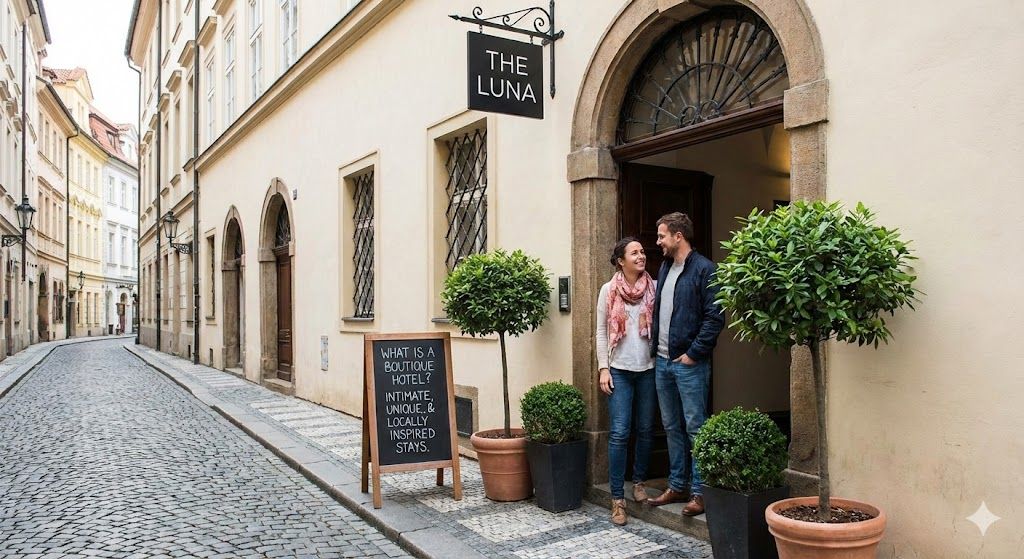
What Is a Boutique Hotel? Everything You Should Know
Travel preferences have shifted dramatically over the past two decades. Instead of standardized hotel rooms and predictable experiences, many travelers now seek accommodations that feel distinctive, personal, and connected to their destination.
Boutique hotels have emerged as one of the most popular responses to this shift in hospitality. These properties focus on atmosphere, design, and individualized guest service rather than large-scale operations.
Understanding what defines a boutique hotel helps travelers choose accommodations that match their preferences while also helping hotel owners develop properties that deliver memorable guest experiences.
Boutique Hotel Definition
A boutique hotel is a small hospitality property—typically fewer than 100 rooms—designed around distinctive architecture, personalized service, and a unique guest experience connected to its location.
Boutique hotels differ from traditional chain hotels because they emphasize individuality rather than uniformity. Instead of repeating the same design and layout across multiple locations, boutique properties often develop their own identity through architecture, interior design, and curated guest experiences.
This approach allows boutique hotels to create memorable stays that feel immersive and personal, which has become increasingly attractive to modern travelers seeking more than just a place to sleep.
In plain English, a boutique hotel is a smaller hotel designed to feel unique, stylish, and personal rather than standardized like a typical chain hotel.
In Simple Terms, Boutique Hotels Are Known For
Most boutique hotels share several defining characteristics that shape the guest experience.
- smaller properties with fewer rooms
- distinctive architecture and interior design
- highly personalized guest service
- strong connection to local culture and surroundings
- curated hospitality experiences
Together, these characteristics create an atmosphere that feels intimate and memorable. Instead of prioritizing scale or efficiency alone, boutique hotels prioritize design, hospitality, and guest experience.
The Origins of Boutique Hotels
The boutique hotel concept emerged during the late twentieth century as travelers began looking for alternatives to standardized chain hotels.
Early boutique properties appeared in major cities such as London, New York, and San Francisco during the 1980s. These hotels offered something different from traditional hospitality: smaller properties designed around style, architecture, and local culture rather than uniform branding.
Instead of replicating the same design across multiple locations, boutique hotels developed unique identities tied to their surroundings. Some properties were built as design-forward hotels, while others were historic buildings adapted into hospitality spaces.
This approach created hotels that felt personal and authentic, which resonated strongly with travelers who valued atmosphere and character.
As global travel expanded and guest expectations evolved, the boutique hotel model gained momentum across cities, resort destinations, and cultural tourism markets.
Why Boutique Hotels Have Become So Popular
Boutique hotels have grown rapidly because they align closely with modern travel preferences.
Many travelers now prioritize experiences, aesthetics, and local immersion when choosing accommodations. Boutique hotels are uniquely positioned to deliver these experiences because their smaller scale allows them to emphasize design, service, and atmosphere.
Several factors have contributed to the growth of boutique hotels:
- travelers seeking more personalized hospitality
- rising demand for experiential travel
- interest in design-focused and lifestyle hotels
- social media influence on visually distinctive spaces
- growing appreciation for local culture and authenticity
These trends have reshaped the hospitality industry by shifting guest expectations away from purely functional accommodations and toward immersive experiences.
As a result, boutique hotels have become an appealing option for travelers who value individuality, design, and memorable stays.
What Makes a Boutique Hotel Different?
While boutique hotels share a common philosophy, they can vary widely in design, location, and style.
Some boutique hotels operate in historic buildings, while others are newly built design-focused properties. Some function as small urban hotels, while others operate as boutique resorts offering luxury amenities.
Despite these differences, most boutique hotels share a consistent set of features that distinguish them from traditional hotels.
In the next section, we’ll examine the core characteristics that define boutique hotels and separate them from large hospitality brands.
Key Features of a Boutique Hotel
While boutique hotels vary widely in style and location, most share a set of defining characteristics that distinguish them from traditional hotels and large hospitality brands.
These features shape both the guest experience and the operational philosophy behind boutique hospitality.
Small Size and Intimate Atmosphere
Boutique hotels are typically smaller than traditional hotels, often operating with fewer than 100 rooms. This smaller scale allows staff to provide more attentive service and maintain a stronger connection with guests throughout their stay.
Unlike large hotels that prioritize efficiency through standardized processes, boutique properties emphasize hospitality that feels personal and attentive. Guests are more likely to interact with staff who remember preferences, recommend local experiences, and provide tailored service.
The result is an atmosphere that feels intimate rather than transactional, which many travelers find more memorable and comfortable.
Distinctive Design and Architecture
Design plays a central role in defining boutique hotels. Instead of repeating a standardized room layout across hundreds of properties, boutique hotels typically invest heavily in architecture, interior design, and visual identity.
Many boutique hotels are designed to reflect the surrounding location. This might include locally inspired artwork, regional building materials, or interiors influenced by the neighborhood’s cultural character.
Because of this design focus, boutique hotels often become destinations in their own right. Guests frequently choose these properties not only for accommodation but also for the atmosphere and aesthetic experience they offer.
Personalized Guest Service
Personalized service is one of the most recognizable features of boutique hospitality.
Because boutique hotels operate with fewer rooms, staff can focus on delivering customized guest experiences. This might include remembering returning guests’ preferences, offering personalized recommendations for restaurants and activities, or tailoring in-room amenities for special occasions.
This level of service creates a sense of hospitality that feels intentional rather than automated. For many travelers, that attention to detail becomes one of the most memorable parts of their stay.
Connection to Local Culture
Boutique hotels often incorporate elements of the surrounding destination into the guest experience.
This connection may appear through interior design, culinary offerings, partnerships with local businesses, or curated activities that highlight regional culture. For example, a boutique hotel in a historic district may feature locally sourced artwork or host events that showcase regional cuisine.
By integrating the surrounding environment into the guest experience, boutique hotels help travelers feel connected to the place they are visiting rather than isolated from it.
Curated Experiences and Lifestyle Hospitality
Boutique hotels frequently focus on creating experiences that extend beyond traditional lodging.
Examples may include curated dining programs, wellness offerings, cultural events, or design-focused spaces intended to encourage social interaction. Some boutique properties operate as boutique resorts, offering amenities such as spas, pools, or destination dining while maintaining their smaller scale and personalized atmosphere.
These curated experiences allow boutique hotels to deliver hospitality that feels immersive and memorable rather than purely functional.
Boutique Hotels vs Traditional Hotels
Understanding how boutique hotels differ from traditional hotels helps clarify what makes this segment unique.
Traditional hotels often focus on consistency and scale. Large hotel chains typically standardize design, services, and operations across hundreds or even thousands of locations. This approach ensures predictable experiences for guests traveling between destinations.
Boutique hotels take a different approach. Rather than prioritizing uniformity, they emphasize individuality and character. Each property typically develops its own identity, influenced by architecture, design, and the surrounding location.
This difference creates two distinct hospitality experiences. The following comparison highlights the key differences between boutique hotels and traditional hotels.
| Feature | Boutique Hotel | Traditional Hotel |
|---|---|---|
| Size | Typically small properties, often under 100 rooms | Often large properties with hundreds of rooms |
| Design | Distinctive architecture and unique interior design | Standardized brand design across locations |
| Service | Highly personalized guest service | Process-driven service with consistent standards |
| Identity | Each property has a distinctive personality | Strong brand identity across multiple locations |
| Guest Experience | Curated and immersive stays focused on atmosphere and design | Predictable and standardized stays |
Both models serve important roles within the hospitality industry. However, boutique hotels appeal particularly to travelers who value atmosphere, individuality, and personalized service.
What Does a Boutique Hotel Look Like?
There is no single architectural style that defines a boutique hotel. A boutique hotel might occupy a restored historic mansion, a converted industrial building, a contemporary urban property, a mountain lodge, or a small coastal resort.
What these properties tend to share is an intentional relationship between architecture, interior design, location, amenities, and guest experience. Rather than treating the building as simply a place to house guestrooms, boutique hotels often use the physical property itself to establish a distinctive identity.
That identity can take several different forms.
Historic and Adaptive-Reuse Boutique Hotels
Some boutique hotels are created by adapting historic or existing buildings for hospitality use. Mansions, warehouses, factories, townhouses, and other heritage properties can provide architectural character that would be difficult to reproduce in a newly constructed hotel.
These properties often preserve recognizable features of the original building. A converted warehouse, for example, might retain exposed brick walls, large industrial windows, timber beams, high ceilings, or original structural columns. A historic mansion might instead feature ornate staircases, fireplaces, decorative molding, courtyards, stonework, or a preserved historic façade.
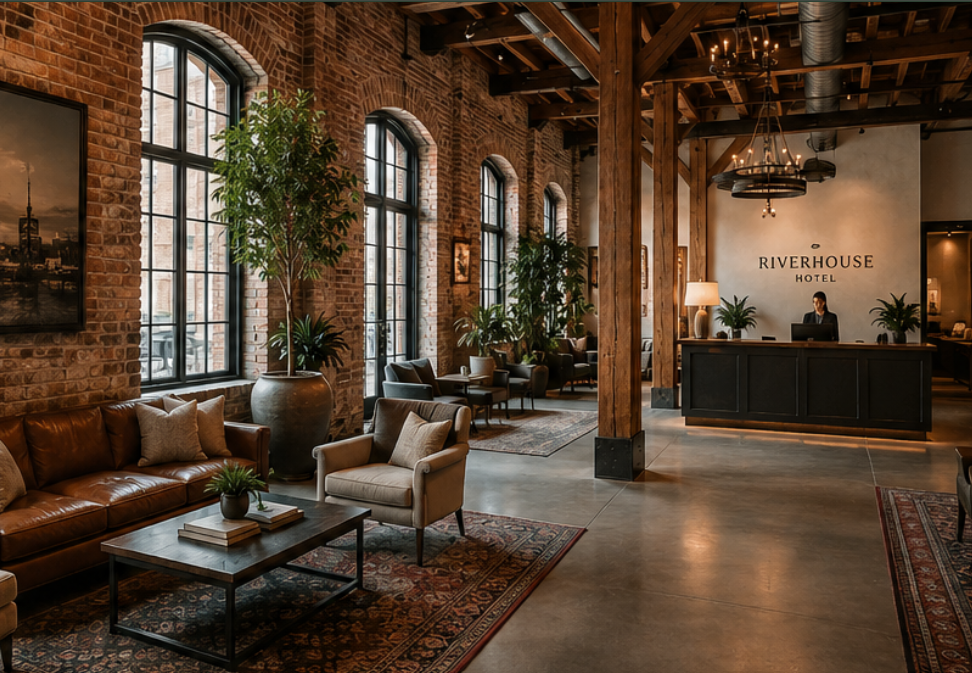
Interior design can then introduce contemporary furniture, lighting, artwork, and hotel amenities without eliminating the character of the original structure.
This approach is commonly known as adaptive reuse: an existing building is given a new purpose while significant elements of its architecture and identity are retained.
For boutique hotels, adaptive reuse can also strengthen the property's connection to its destination. The building becomes part of the guest experience because its history and architecture help tell the story of the place where the hotel operates.
Contemporary and Urban Design Boutique Hotels
Not every boutique hotel occupies a historic building. Many are contemporary properties where architecture and interior design are deliberately used to create a recognizable hotel identity.
An urban boutique hotel might feature a distinctive exterior façade, dramatic entrance, design-focused lobby, custom furniture, curated artwork, architectural lighting, restaurant or bar, rooftop terrace, and social gathering spaces.
Guestrooms may continue the same design language through materials, furniture, artwork, lighting, bathrooms, and other details.
The important distinction is intentionality. Instead of applying a standardized design that can be reproduced across hundreds of hotels, the property develops an aesthetic specifically for its building, brand, neighborhood, or target guest.
In these hotels, spaces such as the lobby, restaurant, courtyard, rooftop, and bar can become as important to the property's identity as the guestrooms themselves.
Destination Boutique Hotels
Boutique hotel design can also respond directly to the surrounding landscape.
In mountain destinations, for example, a boutique property might incorporate timber, stone, fireplaces, large windows, outdoor terraces, and gathering spaces oriented toward mountain or forest views. The architecture and materials help connect the hotel to its natural setting.
A coastal boutique hotel might instead emphasize ocean-facing balconies, terraces, pools, outdoor dining areas, landscaped courtyards, beach access, and indoor-outdoor spaces positioned around water views.
Similar principles can apply in wine regions, desert destinations, rural areas, and other leisure markets. Materials, landscaping, building orientation, common areas, and amenities can all be designed around the environment guests have traveled to experience.
This is one reason boutique hotels can look dramatically different from one destination to another. Their physical identity often reflects the character of the place rather than a universal hotel design.
Boutique Resorts
Some boutique properties combine the individuality of a boutique hotel with the expanded amenities associated with a resort.
A boutique resort may include multiple low-rise buildings, landscaped grounds, pools, spas, wellness spaces, restaurants, bars, outdoor recreation areas, private beach access, or other destination amenities.
The difference is not simply the presence of a pool or spa. Large conventional resorts can offer the same amenities.
A boutique resort typically integrates those features into a smaller-scale, design-led property with a distinctive identity. Architecture, landscaping, guestrooms, common areas, amenities, and service are intended to feel like parts of the same experience rather than standardized components of a large resort complex.
This allows a property to provide a more extensive resort experience while retaining many of the characteristics associated with boutique hospitality.
Luxury Boutique Hotels
Boutique hotels can also operate at a luxury level.
A luxury boutique hotel may combine distinctive architecture and individualized design with features such as premium materials, spacious guestrooms or suites, high-end furnishings, destination dining, a spa, concierge service, landscaped outdoor areas, and other upscale amenities.
The physical environment will often emphasize craftsmanship and attention to detail. Natural stone, custom millwork, designer furniture, original artwork, premium textiles, architectural lighting, and carefully designed bathrooms are examples of features that may contribute to a luxury experience.
However, luxury and boutique describe different characteristics of a hotel.
Luxury refers primarily to the level of accommodation, amenities, service, and experience being provided. Boutique refers to the distinctive identity and hospitality style of the property.
A hotel can therefore be both boutique and luxury, but expensive finishes or luxury amenities alone do not make a hotel boutique.
The Building Helps Express the Hotel's Identity
A historic mansion, converted warehouse, contemporary city hotel, mountain lodge, or coastal resort can all become boutique hotels.
The building type itself does not determine whether a property is boutique.
What often distinguishes the physical experience of a boutique hotel is not the type of building, but the degree to which the property has been intentionally designed around its own identity rather than a standardized design intended to be repeated across many locations.
Architecture, interior design, scale, guestrooms, common spaces, amenities, service, and connection to the destination all work together to express that identity.
That is why boutique hotels can look dramatically different from one another while still belonging to the same hospitality category. The goal is not to conform to one architectural style. It is to create a property with an identity guests can recognize, experience, and remember.
Boutique Hotels vs Luxury Hotels
Boutique hotels and luxury hotels are sometimes confused, but they are not in the same category.
Luxury hotels are defined primarily by service level, amenities, and price point. These properties often provide extensive services such as concierge teams, fine dining restaurants, spas, and premium accommodations.
Boutique hotels, on the other hand, are defined more by character and experience than by luxury alone. While many boutique hotels operate at a luxury level, others may focus on design and atmosphere rather than offering the full range of traditional luxury services.
In practice, some hotels fall into both categories—luxury boutique hotels combine high-end services with distinctive design and smaller scale.
The key distinction is that luxury refers to service level, while boutique refers to hospitality style and property identity.
Boutique Hotels vs Lifestyle Hotels
Lifestyle hotels represent another category within modern hospitality that sometimes overlaps with boutique properties.
Lifestyle hotels are typically designed around a specific brand identity or lifestyle concept. These hotels often emphasize social spaces, contemporary design, and experiences that appeal to particular traveler demographics such as young professionals or design-focused guests.
Many lifestyle hotels are developed by larger hotel brands, which means they can still operate at a larger scale than boutique properties.
Boutique hotels, by contrast, tend to prioritize individual property identity rather than brand identity. Each property often develops its own design philosophy and guest experience rather than following a standardized concept.
Because of these similarities, some properties may be described as both boutique and lifestyle hotels. However, the defining difference remains the emphasis on individual character versus branded concept.
Why Boutique Hotels Are Growing and Why Travelers Choose Them
Why Travelers Choose Boutique Hotels
Boutique hotels appeal to travelers because they deliver something many large hotels struggle to replicate: a stay that feels distinctive, personal, and connected to the destination.
Rather than emphasizing standardized rooms and predictable experiences, boutique hotels focus on atmosphere, design, and individualized hospitality. Guests often choose these properties because they want accommodations that feel intentional and memorable rather than purely functional.
This distinction matters because modern travel decisions increasingly revolve around experience. For many travelers, the hotel itself becomes part of the trip rather than simply the place where they sleep.
Boutique Hotels Create More Memorable Travel Experiences
Boutique hotels are designed around experience as much as accommodation.
Because these properties tend to operate on a smaller scale, hotel teams can curate the guest journey more carefully. From distinctive lobby environments to locally inspired dining programs and curated neighborhood recommendations, boutique hotels often deliver stays that feel immersive rather than standardized.
This focus on atmosphere and personalization helps explain why boutique hospitality continues to gain popularity among travelers seeking more meaningful travel experiences.
Global Market Research Shows Rapid Growth in Boutique Hospitality
The rising popularity of boutique hotels is supported by strong industry data from multiple market research firms.
The report “Global Boutique Hotel Market Size & Trends, 2025–2030” by Grand View Research estimates that the global boutique hotel market reached approximately USD 26.68 billion in 2024 and is projected to grow to USD 40.26 billion by 2030, representing a 7.2% compound annual growth rate (CAGR).
Grand View Research also notes that luxury boutique hotels generated the largest share of market revenue in 2024, while North America accounted for roughly 36.7% of the global boutique hotel market.
These findings suggest that boutique hospitality is no longer a niche category within the lodging industry. Instead, it has become a major growth segment driven by evolving traveler preferences and new hospitality concepts.
Industry Reports Show Consistent Growth Projections
The report “Boutique Hotel Market: Global Industry Analysis, Size, Share, Growth, Trends, and Forecast 2025–2034” by Zion Market Research estimates that the global boutique hotel market was valued at approximately USD 26.67 billion in 2024 and is expected to reach about USD 50.06 billion by 2034, growing at roughly 6.5 % CAGR over the forecast period. The report attributes this growth to rising demand for experiential travel, personalized service, and distinctive accommodations that reflect local culture.

Other hospitality industry analyses show similar growth patterns.
The “Hotel Management Industry Statistics Report (2026)” published by Gitnux estimates that the global boutique hotel market reached USD 25.36 billion in 2022 and forecasts approximately 7.5% CAGR growth through 2030.
Meanwhile, the “Boutique Hotel Market (2025–2035)” report by Future Market Insights projects that the boutique hotel sector could reach USD 20.8 billion by 2035, growing at approximately 6.9% CAGR.
The Future Market Insights report also highlights that business-oriented boutique hotels represent one of the fastest-growing subsegments, particularly in regions with strong business travel demand.
Across these studies, the overall conclusion is consistent: boutique hotels represent one of the fastest-expanding segments of the global hospitality industry.
Industry Analysts Expect the Market to Continue Expanding
Additional hospitality research reinforces this growth outlook.
The hospitality technology company Planet outlines similar trends in its article “What Is a Boutique Hotel?” (Planet Hospitality Industry Overview, 2023 update). According to Planet’s industry analysis, the boutique hotel market could grow from approximately USD 25.2 billion in 2024 to roughly USD 50.5 billion by 2034, representing approximately 7.2% CAGR growth.
The Planet report also notes that leisure travelers account for roughly 70.2% of boutique hotel demand. In comparison, North America represents approximately 37.2% of the global market, generating an estimated USD 9.3 billion in boutique hotel revenue in 2024.
These figures further demonstrate how boutique hospitality has evolved from a niche concept into a significant and growing part of the global hotel industry.
Technology and Amenities Are Increasingly Important
While boutique hotels are often known for design and personalization, technology is also becoming a key differentiator.
An industry analysis from Nomadix titled “Connectivity for Boutique Hotels and Resorts” (March 2026) highlights how boutique hotels increasingly compete by offering high-end amenities, seamless Wi-Fi connectivity, smart-room technology, and digitally integrated guest experiences.
The Nomadix article also references projections from the Future Market Insights “Boutique Hotel Sector Outlook”, noting that boutique properties are increasingly differentiating themselves through a combination of personalized hospitality and modern technology infrastructure.
This balance between technology and experience allows boutique hotels to remain competitive while maintaining the personalized service that defines the category.
Who Boutique Hotels Are Best For
Because boutique hotels prioritize atmosphere, experience, and service, they tend to appeal to specific types of travelers.
Boutique hotels are especially attractive to:
- couples seeking romantic or design-focused stays
- leisure travelers interested in experiential travel
- solo travelers who value atmosphere and character
- design-conscious travelers who appreciate aesthetics
- guests seeking personalized hospitality
- travelers who want a deeper connection to local culture
These travelers often choose boutique hotels because they want accommodations that feel curated and memorable rather than standardized.
Examples of Boutique Hotel Concepts
Boutique hotels can take many forms, which is part of what makes the category so dynamic.
Examples of boutique hotel concepts include:
- historic mansions converted into boutique hotels
- urban design hotels focused on architecture and interiors
- boutique beach resorts offering wellness and spa experiences
- heritage buildings adapted into culturally distinctive hotels
- small luxury hotels focused on personalized guest service
Although these properties vary widely in design and location, they share a common philosophy: hospitality centered on individuality, atmosphere, and memorable guest experiences.
How Boutique Hotels Operate and Why Management Matters
Boutique Hotels as a Modern Hospitality Model
Boutique hotels are often described in terms of design and guest experience, but behind the atmosphere and personalized service is a structured hospitality model.
Successful boutique properties rely on coordinated strategies that align guest experience, pricing, operations, and brand identity. Because boutique hotels compete through distinctiveness rather than scale, the way they are managed plays a major role in their long-term success.
Every operational decision—from pricing to marketing to service standards—must reinforce the hotel’s identity while maintaining profitability.
This balance between experience and performance is one of the defining challenges of boutique hospitality.
The Four Systems That Drive Boutique Hotel Performance
Behind every successful boutique hotel is a set of operational systems that work together to deliver both guest satisfaction and financial performance.
These systems ensure that a boutique property maintains its distinctive character while operating efficiently in a competitive hospitality market.
Revenue Management
Revenue management determines how a boutique hotel prices rooms, manages demand, and maximizes profitability.
Because boutique hotels typically operate with fewer rooms than large hotels, the pricing strategy becomes especially important. Revenue management systems help operators balance occupancy, nightly rates, and seasonal demand while maintaining the positioning of the property.
Effective revenue management ensures that boutique hotels attract the right guests while protecting the value of their brand and experience. A structured approach to pricing, forecasting, and demand optimization is outlined in the Boutique Hotel Revenue Management Framework.
Operations Management
Operations management focuses on the day-to-day systems that allow a boutique hotel to function smoothly.
This includes staff training, service standards, guest communication, housekeeping coordination, and technology infrastructure. Because boutique hotels often emphasize personalized service, operations management must balance efficiency with attention to detail.
Well-designed operations systems allow boutique hotels to deliver consistent guest experiences while maintaining the flexibility that defines boutique hospitality. For a deeper look at how boutique properties structure their operational systems, see the Boutique Hotel Operations Framework.
Property and Asset Management
Property management and asset strategy determine how the hotel performs financially over the long term.
This includes investment planning, capital improvements, brand positioning, and long-term operational oversight. Boutique hotel asset management focuses on maintaining the unique character of the property while ensuring it remains competitive within its market.
An effective asset strategy allows boutique hotels to increase long-term value while preserving the distinctive atmosphere that attracts guests. The Boutique Hotel Asset Management Framework explains how owners and operators align operational performance with long-term property value.
Marketing and Reputation Management
Marketing and reputation management shape how travelers discover and evaluate a boutique hotel.
Unlike large hotel chains that rely heavily on brand recognition, boutique hotels often depend on storytelling, design identity, guest reviews, and digital visibility to attract travelers.
Successful boutique hotel marketing strategies combine strong visual branding, search visibility, social media engagement, and reputation management to build trust with potential guests. The Hotel Marketing Strategy for Boutique Hotels: A Practical Framework breaks down how boutique hotels attract and convert guests through modern hospitality marketing.
Why Management Strategy Matters for Boutique Hotels
Because boutique hotels differentiate themselves through experience and identity, management decisions have a direct impact on guest perception.
Pricing strategies influence the type of travelers a hotel attracts. Operational systems shape the quality of service guests receive. Marketing and reputation management determine how travelers discover the property in the first place.
When these systems work together effectively, boutique hotels can create properties that are both memorable for guests and financially sustainable for owners.
Understanding Key Hotel Performance Metrics
Hotel performance is measured through several core metrics that help owners and operators evaluate pricing, demand, revenue, and profitability. Average Daily Rate (ADR) measures the average room rate earned on occupied rooms, while Revenue per Available Room (RevPAR) combines room pricing and occupancy to provide a broader view of room revenue performance. Hotel Occupancy Rate measures the percentage of available rooms sold during a given period, and Hotel Net Operating Income (NOI) helps measure the property's profitability after operating expenses. Together, these metrics provide a clearer picture of a hotel's operational and financial performance.
Final Thoughts
Boutique hotels have become one of the most dynamic segments of the hospitality industry because they align closely with modern travel preferences.
Rather than competing through scale or standardization, boutique properties focus on individuality, design, and personalized hospitality. These characteristics allow boutique hotels to create stays that feel distinctive and memorable while appealing to travelers seeking authentic experiences.
As experiential travel continues growing worldwide, boutique hotels are likely to remain an important part of the hospitality landscape.
For travelers, they offer immersive and stylish accommodations. For owners and operators, they represent an opportunity to build hospitality properties that stand out in an increasingly competitive market.
Frequently Asked Questions
What makes a boutique hotel different from a regular hotel?
A boutique hotel is typically smaller, design-focused, and built around personalized guest service. Unlike large chain hotels that prioritize standardization, boutique properties emphasize individuality, atmosphere, and connection to the surrounding location.
How many rooms does a boutique hotel usually have?
Most boutique hotels operate with fewer than 100 rooms. This smaller size allows hotel staff to provide more personalized service and maintain an intimate atmosphere for guests.
Are boutique hotels always luxury hotels?
Not always. While many boutique hotels operate at a luxury level, the term “boutique” refers primarily to the property’s size, design, and hospitality style rather than its price category.
Why do travelers prefer boutique hotels?
Many travelers prefer boutique hotels because they offer distinctive design, personalized service, and a stronger connection to local culture compared to traditional hotels. Instead of standardized rooms and predictable experiences, boutique hotels often create stays that feel unique and closely tied to the destination.
This preference is also driven by broader experiential travel trends, where travelers increasingly prioritize memorable experiences over purely functional accommodations. Boutique hotels often reflect the surrounding neighborhood through architecture, local artwork, curated dining, and partnerships with nearby businesses, which helps guests feel more connected to the place they are visiting.
Boutique properties also tend to provide more personalized hospitality. With fewer rooms than large chain hotels, staff can deliver tailored recommendations, customized services, and attentive guest experiences that feel intentional rather than automated.
For many travelers—especially younger travelers and experience-focused tourists—boutique hotels provide a combination of atmosphere, design, and authenticity that makes the stay itself part of the travel experience.
Can boutique hotels work for business travel?
Yes. Many boutique hotels offer amenities that appeal to business travelers, including meeting spaces, high-speed internet, and comfortable work environments, while maintaining the personalized hospitality that defines boutique properties.
More Recent Articles