Boutique Hotel Revenue Management Framework
Boutique Hotel Revenue Management Framework
Yield Strategy, Channel Optimization & Profit Discipline
By: Elliott Caldwell — — Updated
Executive Overview: Revenue as Financial Infrastructure
Boutique hotel revenue management is a structured discipline that aligns pricing architecture, channel economics, demand forecasting, and operational capacity to achieve measurable financial performance. It is not simply rate adjustments or dynamic pricing software. It is the financial control system that protects margin integrity while preserving brand positioning.
Boutique properties operate with smaller inventory, leaner staffing models, and elevated guest expectations. Each room night carries disproportionate financial weight. Commission exposure has an outsized margin impact. Discounting cycles can weaken brand equity quickly.
When engineered correctly, revenue management in boutique hotels:
- Protects ADR integrity
- Optimizes channel mix
- Reduces commission dependency
- Strengthens RevPAR and GOPPAR
- Stabilizes NOI
- Improves valuation resilience
When improvised, it leads to pricing volatility, overreliance on OTAs, margin erosion, and asset instability. Revenue management is not reactive pricing. It is a structural financial architecture.
While revenue management directly influences profitability, its primary role is to structure pricing, channel mix, and demand capture. A deeper analysis of how these decisions impact Net Operating Income (NOI) and long-term asset value is explored separately.
The Three-Layer Boutique Revenue Model
Revenue performance in boutique environments depends on three integrated layers: pricing architecture, channel mix optimization, and forecasting discipline.
1. Pricing Architecture: Positioning Before Occupancy
In boutique hotels, pricing must reflect positioning, not desperation for occupancy.
Core elements of pricing architecture include:
- Base rate (BAR) structuring
- Segmented rate tiers (leisure, corporate, event, group)
- Experience-driven premium modeling
- Length-of-stay optimization
- Rate parity governance
- Discount control discipline
Pricing architecture determines whether the property is perceived as premium, accessible, or commoditized. Undisciplined discounting lowers not only ADR but also brand equity. Structured segmentation ensures that high-value guests are not displaced by low-contribution bookings.
For boutique hotels, pricing must answer a central question: Is this booking increasing contribution margin — or just filling space?
Strong pricing architecture creates resilience. Weak pricing creates dependency.
Effective pricing architecture:
- Increases contribution margin per room
- Protects perceived exclusivity
- Improves last-room value capture
- Enhances pricing resilience during compression periods
Occupancy without margin is not performance.
2. Channel Mix Optimization: Distribution as Margin Control
Distribution strategy directly influences profitability.
Boutique hotels typically balance:
- Direct bookings (brand.com)
- OTAs
- Corporate negotiated accounts
- Group and event bookings
- Meta-search traffic
Each channel carries different:
- Commission structures
- Cancellation behavior
- Booking windows
- Revenue contribution margins
Two properties can show identical ADR and occupancy yet produce dramatically different profitability based on channel mix. A property heavily weighted toward 18–25% OTA commissions may sacrifice meaningful GOPPAR compared to one with strong direct conversion.
Channel discipline is not about eliminating OTAs. It is about ensuring distribution cost does not erode net revenue.
Revenue strategy must evaluate net contribution — not gross booking volume.
Optimized channel mix:
- Reduces blended commission exposure
- Increases direct booking share
- Improves net revenue per available room
- Reduces earnings volatility
In other words, distribution decisions are financial decisions.
Demand Capture & Direct Booking Leverage
Channel mix is not only a distribution decision — it is a demand control decision. The strength of a hotel’s marketing system directly determines how much revenue flows through high-cost channels versus owned channels.
Direct booking growth does not happen by accident. It is the result of structured demand capture across the guest journey.
Key components of demand capture include:
- Direct booking site conversion optimization
- Paid search and meta-search capture for high-intent demand
- Retargeting systems that recover abandoned traffic
- Email and CRM lifecycle marketing for repeat guests
- Organic search visibility for destination and experience-driven queries
- Content positioning that aligns with guest intent before booking decisions are made
When these systems are weak or absent, demand defaults to OTAs. The property becomes dependent on third-party platforms that charge 18–25% commissions, reducing net revenue per booking.
When demand capture is structured:
- Direct booking share increases
- Blended acquisition cost declines
- Customer lifetime value improves
- Pricing control strengthens due to reduced channel dependency
Marketing, in this context, is not a top-of-funnel activity. It is a financial lever that determines distribution efficiency and margin retention.
A disciplined revenue strategy treats marketing as an extension of channel optimization — not as a separate function.
3. Forecasting & Demand Intelligence: Anticipation Over Reaction
Small inventory properties have limited room for error. Forecasting must guide pricing cadence.
Effective forecasting systems include:
- Historical seasonality analysis
- Booking pace tracking
- Market compression detection
- Competitive set benchmarking
- Event-based premium identification
- Group displacement modeling
Small properties have limited room to absorb miscalculations. Underpricing during compression periods sacrifices high-margin opportunities. Overpricing during low demand suppresses occupancy unnecessarily.
Forecasting provides pricing confidence. It enables management to escalate rates during compression and protect occupancy during softer cycles without panic discounting.
Revenue discipline depends on predictive clarity.
Forecasting informs:
- Minimum stay controls
- Rate escalation timing
- Promotional deployment
- Staffing alignment
Without demand intelligence, pricing becomes emotional and reactive.
Profitability Modeling in Boutique Hotels
Revenue strategy must connect to margin protection. Key performance indicators include:
- ADR (Average Daily Rate)
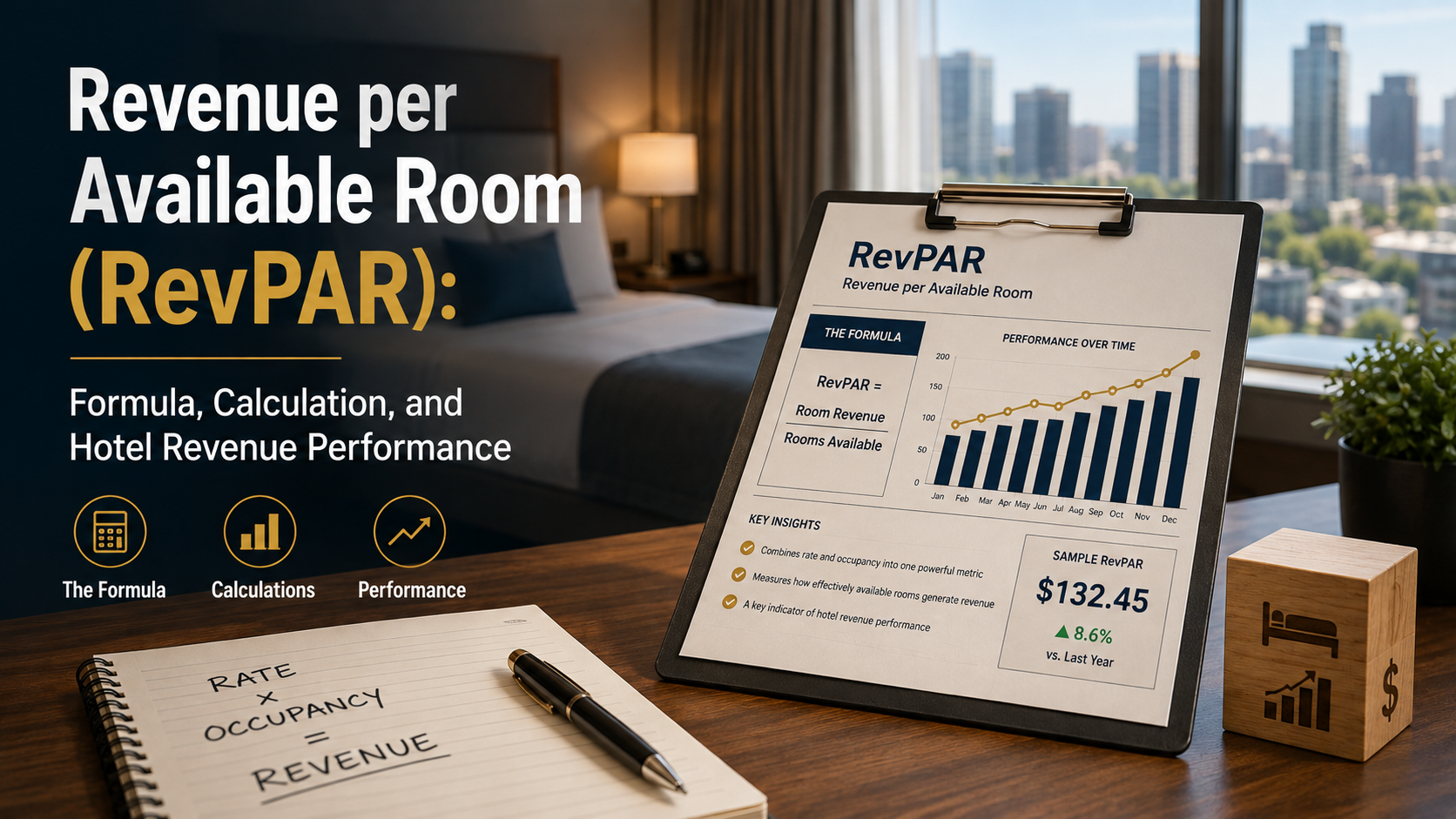
- RevPAR (Revenue per Available Room)
- GOPPAR (Gross Operating Profit per Available Room)
- Labor cost as a percentage of revenue
- Cost per occupied room
- Net revenue per booking (after commission)
In boutique hotels, strong ADR alone does not guarantee profitability. Commission-heavy channel mix, inflated labor ratios, or undisciplined discounting can erode GOPPAR quickly.
Revenue management is effective when:
- Pricing decisions increase net profitability
- Channel shifts reduce blended acquisition cost
- Forecast accuracy improves staffing efficiency
- Margin expansion translates into stable NOI
Revenue management must be evaluated on net contribution, not surface-level metrics. A property may report rising ADR while simultaneously losing margin due to distribution cost creep. Similarly, occupancy gains during low-demand periods may appear positive but can increase labor strain without proportional revenue lift.
Effective revenue discipline ensures that pricing supports operational efficiency rather than undermining it. When forecasting aligns with staffing models, labor becomes proportional instead of reactive. When channel mix improves, commission leakage declines. When discounting is controlled, brand positioning strengthens.
Margin expansion is not accidental — it is engineered through coordinated pricing, distribution, and operational alignment.
Revenue discipline protects asset performance by converting daily rate decisions into long-term NOI stability.
Integrated Performance Impact
Revenue management does not operate independently from operations or asset oversight. In boutique environments especially, financial performance is the result of coordinated systems rather than isolated decisions.
Revenue architecture influences performance across multiple layers:
- ADR stability strengthens NOI
- NOI stability improves valuation multiples
- Balanced channel mix reduces financial volatility
- Accurate forecasting improves capital planning
ADR stability protects revenue predictability. When rates fluctuate wildly due to discounting or reactive pricing, earnings become inconsistent. Stable ADR supports steady revenue flow, which directly strengthens Net Operating Income.
NOI stability is what ownership groups and investors evaluate most closely. Predictable earnings reduce perceived risk, and reduced risk supports stronger valuation multiples in both cap-rate and EBITDA-based assessments.
Balanced channel mix lowers volatility by reducing dependence on high-commission, high-cancellation sources. A diversified distribution structure stabilizes cash flow and improves net revenue retention.
Accurate forecasting allows management to align staffing, maintenance planning, and capital improvements with realistic demand expectations. This reduces emergency cost spikes and improves long-term budgeting precision.
When revenue architecture aligns with disciplined operations management, boutique hotels transition from reactive pricing environments to predictable financial engines.
Predictability is the difference between lifestyle hospitality and institutional-grade asset performance.
Boutique Hotel Revenue Benchmarks & Market Variability
A structured revenue management framework is only meaningful when measured against realistic performance ranges. Boutique hotels operate across diverse market environments, and revenue outcomes vary significantly by positioning, geography, and service intensity.
Revenue performance in boutique hotels is typically influenced by:
- Market type (urban, resort, secondary city, historic district)
- Brand positioning (luxury, lifestyle, soft-brand independent)
- Service model (limited-service vs full-service with F&B)
- Distribution mix maturity
- Operational efficiency
Urban boutique hotels often demonstrate stronger ADR consistency driven by corporate demand and midweek occupancy stability. Resort-oriented boutiques may capture higher seasonal premiums but experience sharper volatility during the shoulder periods.
What matters is not isolated revenue highs, but revenue stability across demand cycles.
High-performing boutique hotels are characterized less by peak compression windfalls and more by sustained margin protection throughout the calendar year.
Revenue Growth Rate Dynamics in Boutique Hotels
Revenue growth in boutique hotels does not typically scale linearly. Instead, it follows structured inflection points.
Growth generally emerges from:
- ADR repositioning after brand refinement
- Channel mix rebalancing toward direct revenue
- Operational alignment reduces cost leakage
- Market demand compression events
- Asset upgrades improving perceived value
In mature markets, boutique revenue growth often stabilizes after repositioning phases. Long-term growth then depends on incremental ADR discipline rather than occupancy expansion.
Rapid growth is possible during repositioning or market upswing periods. However, aggressive short-term revenue acceleration often introduces volatility if not supported by disciplined cost structure alignment.
Sustainable growth in boutique hotels is margin-driven, not occupancy-driven.
Boutique vs Chain Revenue Profiles
Boutique hotels operate under different revenue constraints than branded chain properties.
Chain hotels benefit from:
- National loyalty program infrastructure
- Corporate negotiated rate scale
- Centralized distribution systems
- Brand-driven booking confidence
Boutique hotels benefit from:
- Pricing flexibility
- Experience-driven premium positioning
- Faster repositioning capability
- Stronger local brand identity
However, boutique properties face structural limitations:
- Reduced loyalty program leverage
- Higher OTA dependency risk
- Greater sensitivity to seasonal swings
- Smaller data sets for demand modeling
Revenue management in boutique environments requires precision rather than scale advantage. The absence of brand infrastructure makes disciplined financial oversight more critical, not less.
Revenue Volatility & Structural Risk in Boutique Performance
Boutique hotels are inherently more sensitive to revenue volatility due to smaller inventory bases and leaner operating structures.
Common structural risk factors include:
- Over-concentration in high-commission channels
- Heavy dependence on event-driven demand
- Forecast error amplification due to limited inventory
- Labor rigidity during demand contraction
- Brand dilution from reactive discounting
In small properties, a handful of mispriced nights or misplaced distribution decisions can materially shift quarterly performance.
Revenue volatility is not eliminated through pricing strategy alone. It is reduced through integrated alignment between forecasting, distribution discipline, and operational flexibility.
Predictability is engineered — not assumed.
Revenue Governance, Systems & Oversight Architecture
Revenue performance is not sustained through strategy alone. It requires governance. In boutique environments, where inventory is limited and margins are sensitive, revenue management must operate within a structured oversight model.
Technology supports revenue decisions, but governance sustains them.
Revenue governance typically includes:
- Defined pricing authority hierarchy
- Structured approval processes for discounting
- Weekly performance review cadence
- Channel mix monitoring thresholds
- Forecast variance analysis procedures
- Revenue performance accountability reporting
Without governance controls, even well-designed pricing strategies deteriorate over time. Informal adjustments, ad hoc discounting, or inconsistent oversight gradually weaken rate integrity.
Revenue Management Systems as Oversight Infrastructure
Modern revenue management relies on integrated systems, but in boutique properties those systems must serve structured oversight rather than automation for its own sake.
Core system layers typically include:
- Property management systems (PMS) for inventory and guest data
- Revenue management systems (RMS) for rate modeling
- Channel managers for distribution alignment
- Reporting dashboards for performance visibility
However, systems do not replace judgment. Boutique hotels often lack the data scale of major chains. Automated recommendations must be interpreted within the context of positioning, seasonality, and operational capacity.
Effective governance ensures that tools support strategic objectives rather than override them.
Yield Management Control in Limited Inventory Environments
In large hotels, yield management can rely on volume buffers. In boutique properties, yield decisions must account for limited inventory elasticity.
Governance controls for yield management include:
- Clear displacement evaluation rules for group bookings
- Defined last-room value thresholds
- Compression period escalation guidelines
- Controlled inventory allocation by room type
Without structured yield oversight, small properties risk either underpricing peak demand or overcommitting inventory to low-contribution segments.
Demand Forecasting Accountability Structures
Forecasting in boutique hotels cannot rely solely on historical averages. Smaller datasets increase sensitivity to error.
Governance structures for demand forecasting include:
- Weekly forecast reconciliation reviews
- Variance analysis against budgeted projections
- Rolling 30/60/90-day demand audits
- Scenario modeling for compression and contraction
Forecast accuracy improves when forecasting becomes an accountable process rather than a static spreadsheet.
Forecasting discipline protects operational alignment and margin stability.
Revenue Management Impact on Guests & Brand Governance
Revenue decisions influence guest perception. Governance must account for long-term brand equity alongside financial outcomes.
Governed pricing avoids:
- Inconsistent rate visibility across channels
- Perceived discount manipulation
- Brand erosion through uncontrolled promotions
Guests respond to clarity and consistency. Structured pricing governance protects not only net hotel revenue but also long-term loyalty.
Revenue management in boutique environments must balance profitability with experiential integrity.
Accountability & Reporting Cadence
Revenue oversight becomes institutional when performance is reviewed systematically, interpreted consistently, and acted upon decisively. Governance is not simply meeting frequency — it is decision architecture.
Structured revenue management governance typically includes:
- Weekly revenue meetings
- Monthly margin audits
- Quarterly channel performance reviews
- Annual pricing repositioning assessments
What distinguishes institutional oversight from informal review is not cadence, but depth of analysis.
Weekly Revenue Meetings
Weekly sessions focus on near-term performance signals:
- Booking pace versus forecast
- ADR variance against the budget
- Channel mix shifts
- Compression detection
- Upcoming demand risk
These meetings are not status updates. They are adjustment checkpoints. Rate strategy, minimum stay controls, and channel allocation decisions are recalibrated in real time.
Monthly Margin Audits
Monthly reviews examine structural profitability:
- Blended commission percentage
- Net revenue per booking
- Labor ratio alignment with occupancy
- GOPPAR performance relative to plan
This is where surface-level revenue growth is tested against margin reality. If RevPAR rises but GOPPAR declines, structural leakage is identified and corrected.
Quarterly Channel Performance Reviews
Quarterly oversight moves from tactical to strategic.
Focus areas include:
- Direct booking growth trends
- OTA dependency concentration
- Cancellation volatility by channel
- Corporate and group segment contribution
These reviews prevent slow margin erosion caused by distribution creep. Channel discipline is reinforced before volatility compounds.
Annual Pricing Repositioning Assessments
At least annually, boutique hotels must reassess market positioning.
This includes:
- Competitive set ADR comparison
- Brand perception alignment
- Capital improvements impacting rate potential
- Long-term growth trajectory
Repositioning ensures pricing architecture evolves with market dynamics rather than stagnating.
Why cadence matters
Without a structured reporting cadence, revenue management drifts into reactive behavior. Short-term occupancy concerns override long-term margin discipline. Discounting becomes habitual. Channel creep accelerates quietly.
Predictable review cadence creates financial predictability because it institutionalizes correction mechanisms. Performance variance is addressed early, not rationalized after deterioration.
Accountability transforms revenue management from individual expertise into organizational discipline. Within professional boutique hotel management, that organizational discipline sustains asset performance through both growth cycles and contraction periods.
Frequently Asked Questions
What is boutique hotel revenue management?
Boutique hotel revenue management is the structured discipline of aligning pricing, distribution, demand forecasting, and operational capacity to maximize net profitability. It goes beyond rate adjustments or software automation. In smaller inventory environments, each booking decision materially affects margin performance.
Unlike large chain hotels that rely on scale and centralized systems, boutique properties require precision. Revenue decisions must account for positioning, commission exposure, labor alignment, and demand volatility. Effective revenue management transforms pricing from a tactical activity into a financial control system.
What is the most profitable part of a boutique hotel?
Rooms typically generate the highest profit margin because they carry lower variable costs than food and beverage operations. However, profitability depends on net contribution rather than gross revenue.
A room sold through a high-commission channel may generate less net income than one booked directly at a slightly lower rate. Therefore, the most profitable segment is not defined by ADR alone, but by contribution margin after distribution and operating costs.
Is a boutique hotel profitable?
Yes, boutique hotels can be highly profitable when properly positioned and professionally managed. Their smaller scale allows for strong ADR premiums driven by differentiated experience and brand identity.
However, boutique properties are more sensitive to margin leakage. Commission-heavy channel mix, inconsistent pricing discipline, or poor forecasting can quickly erode profitability. Sustainable profitability depends on structured revenue governance and operational alignment.
What is the average revenue per room in a boutique hotel?
Average revenue per room varies significantly by market type, positioning tier, and service model. Urban luxury boutique hotels typically achieve higher ADR consistency, while resort-oriented properties may experience stronger seasonal peaks.
Rather than focusing solely on average revenue, performance should be evaluated through RevPAR and GOPPAR in relation to competitive set benchmarks. Context matters more than isolated figures.
What are effective revenue management strategies for boutique hotels?
Effective revenue management strategies include disciplined pricing segmentation, channel mix optimization, yield management controls, and structured demand forecasting. Boutique hotels must prioritize margin protection over occupancy maximization.
Because inventory is limited, pricing must reflect positioning rather than reactive discounting. Structured governance ensures that revenue strategies remain aligned with long-term asset performance rather than short-term occupancy pressure.
What is yield management in boutique hotels?
Yield management refers to optimizing pricing and inventory allocation to maximize contribution margin during varying demand conditions. In boutique environments, yield decisions carry amplified impact because inventory buffers are small.
Governed yield management includes displacement analysis for group bookings, last-room value evaluation, and compression period rate escalation. Precision replaces scale in limited-inventory properties.
How do boutique hotels forecast demand?
Demand forecasting in boutique hotels relies on historical seasonality analysis, booking pace monitoring, competitive benchmarking, and event-driven compression tracking. Smaller datasets require disciplined interpretation rather than blind automation.
Forecasting accuracy supports rate confidence and operational alignment. When demand is anticipated correctly, staffing and pricing remain proportional instead of reactive.
What are the challenges of revenue management in boutique hotels?
Boutique hotels face structural challenges including limited inventory depth, higher sensitivity to forecast error, commission concentration risk, and reduced loyalty program leverage compared to chains.
Because each booking carries greater financial weight, minor pricing missteps can materially affect quarterly performance. Governance discipline and consistent oversight mitigate these risks.,
Do boutique hotels earn more than chain hotels?
Boutique hotels may achieve higher ADR premiums due to differentiated positioning, but they lack the scale advantages of major brands. Chain hotels benefit from loyalty infrastructure and corporate rate networks, while boutiques benefit from pricing flexibility and local brand identity.
Financial performance depends less on format and more on management discipline. Well-governed boutique properties can compete effectively when revenue architecture is structured and consistent.
How does revenue management impact asset value?
Revenue management directly influences NOI, and NOI drives valuation. Stable ADR growth, balanced channel mix, and disciplined forecasting improve earnings predictability.
Predictability reduces perceived investment risk, which supports stronger valuation multiples. Structured revenue oversight therefore contributes not only to annual profitability but to long-term asset appreciation.
More Recent Articles