Advantages of Boutique Hotel Management
12 Advantages of Boutique Hotel Management
By Elliott Caldwell —

Boutique hotel management services can create advantages that are difficult to achieve through a highly standardized operating model. Still, those advantages do not come simply from being smaller, design-focused, independent, or described as “boutique.” They come from how the property is positioned, priced, marketed, operated, and experienced by guests.
At Roam Hospitality, we view boutique management as the process of turning a property's individual strengths into competitive advantages. Architecture, location, design, amenities, service, and local character all create possibilities, but management determines whether those characteristics translate into demand and financial performance.
This distinction matters because a distinctive hotel can still be poorly positioned, personalized service can be expensive without creating enough guest value, a restaurant can generate additional revenue while reducing profitability, and premium pricing can hurt conversion when the experience does not justify it. The advantages of boutique hotel management are therefore potential advantages rather than guaranteed outcomes.
When positioning, guest experience, pricing, marketing, and operations reinforce one another, the boutique model provides management with several strategic levers to improve how a property competes.
To understand where these advantages come from, it helps to first define boutique management and how it supports the property owner.
What Is Boutique Hotel Management, and How Does It Support Property Owners?
Boutique hotel management is the coordinated management of a distinctive hotel property across operations, revenue strategy, guest experience, marketing, distribution, and long-term asset performance. For property owners, the purpose is to connect these functions around the characteristics and financial objectives of the individual asset.
Unlike hotel models built primarily around replicating a standardized experience across many properties, boutique management can make more decisions around an individual hotel's location, physical characteristics, destination, target guests, and competitive environment.
Management can then use those characteristics to inform how the property is positioned, which demand it targets, how rooms are priced and distributed, what guest experience is delivered, and where operating or capital resources are allocated.
That does not mean standardization disappears. Housekeeping, maintenance, accounting, safety, revenue management, service standards, and other hotel functions still require repeatable systems.
In our view, strong boutique hotel management standardizes the systems required for consistent execution without unnecessarily standardizing the guest experience or identity of the property.
For owners, that balance is important because individuality only becomes an advantage when it contributes to the performance of the hotel. A distinctive property still needs to attract the right guests, convert demand at appropriate rates, control operating costs, maintain the physical asset, and generate sustainable financial performance.
The advantages below explain the different ways boutique hotel management can support those objectives, and the tradeoffs owners should consider along the way.
The 12 Advantages of Boutique Hotel Management
1. Greater Opportunity for Personalized Guest Service
Personalization is one of the clearest opportunities within boutique hospitality. A smaller or individually positioned property can design service around the guests it actually attracts rather than relying entirely on a service model intended to work identically across a large portfolio.
Management can apply personalization throughout the guest journey, including pre-arrival communication, room and amenity requests, food and beverage preferences, recommendations based on the purpose of the trip, concierge assistance, destination recommendations, recognition of returning guests, and post-stay communication.
The important distinction is between offering personalization and having the guest perceive the experience as personal. Research into hotel personalization has found that those two things are not necessarily the same, and that the way personalization is executed influences whether guests actually perceive and respond to it.
This is where management becomes important. Guest information, staff communication, training, service standards, and technology can be coordinated so employees have enough context and flexibility to respond appropriately to individual guests. When that happens, personalization can contribute to satisfaction, word of mouth, repeat demand, and the property's overall reputation.
The Tradeoff: Personalization Requires Operational Discipline
Personalized service is more difficult to execute consistently than simply instructing employees to make every stay feel personal. Staff need information and training, different departments need to communicate, guest preferences need to be captured appropriately, and employees need enough discretion to respond without creating an inconsistent or unpredictable service experience. Personalization can also increase labor requirements, particularly when the service model depends heavily on individual employee attention.
For that reason, we do not view personalization as the opposite of standardization. The stronger approach is often to standardize the systems behind the experience so the experience itself can feel more personal. That makes staffing, training, communication, guest data, and the broader operating framework part of the personalization strategy.
The management advantage is not simply friendlier service. It is having an operating system capable of recognizing what matters to an individual guest and responding to those preferences consistently.
2. Stronger Positioning Through Design and Brand Identity
One of the most visible characteristics of a boutique hotel is its ability to have an identity specific to the property. That identity may come from architecture, interior design, history, location, amenities, food and beverage, service style, or the relationship between the hotel and its destination.
Distinctive design by itself, however, is not a positioning strategy. Management has to translate those characteristics into a clear reason for the target guest to choose the property instead of the alternatives available in the same market.
Effective positioning connects the property's physical experience with its photography and visual presentation, website and booking experience, OTA listings, amenities, packages, marketing, guest communications, and service delivery. A mountain lodge, historic adaptive-reuse hotel, urban design property, and coastal boutique resort can all belong to the boutique category, but the reasons guests choose each property can be completely different.
This is where design becomes commercially useful. The objective is not simply to create a hotel that looks different; it is to create an experience that is recognizable, understandable, and relevant to a particular segment of demand. That gives marketing something specific to communicate and gives guests a reason to remember the property beyond its location and room rate.
The Tradeoff: Distinctive Design Can Increase Cost and Complexity
Individuality has a cost side. Custom furniture, specialized materials, historic buildings, unusual layouts, original artwork, landscaping, pools, spas, restaurants, and other distinctive elements can create maintenance and capital requirements that more standardized properties may be better able to avoid or manage at scale.
Design can also become disconnected from demand. A hotel can spend heavily creating an unusual physical product without establishing that its target guests value those particular features enough to influence booking behavior or willingness to pay.
This is why we view design as part of positioning rather than an objective by itself. Management should determine which characteristics of the asset can create meaningful value for the guests the hotel wants to attract and then decide how those characteristics should be communicated and supported operationally. That approach connects design decisions with marketing, operations, pricing, and ultimately financial performance.
3. Better Alignment With the Right Guest for the Best Guest Experience
Not all demand has equal value to a hotel. Two guests can book the same room at the same rate and produce different economic outcomes based on length of stay, acquisition cost, ancillary spending, expectations, likelihood of returning, and how well their needs match the experience the hotel provides.
Boutique hotel management has an opportunity to be more deliberate about guest segmentation. Rather than trying to make the property equally appealing to everyone, management can identify the guest segments for which the hotel's particular characteristics create the most value. Depending on the property and market, those segments might include couples and leisure travelers, wellness travelers, food-focused travelers, outdoor recreation guests, luxury leisure travelers, business and bleisure travelers, groups and events, or guests specifically seeking a locally immersive experience.
The appropriate segments should come from actual data rather than assumptions about who should like the property. Management can then align the hotel's positioning, amenities, pricing, distribution, marketing, and service around the demand it is best equipped to serve.
We think of this as guest-property alignment. When the promise made before booking closely matches the experience delivered after arrival, there is less opportunity for expectation mismatch. Hotel satisfaction research can support the underlying relationship between guest expectations, perceived performance, and satisfaction.
The objective is therefore not simply maximum demand. It is attracting enough demand from guests who fit the product and whose expectations the hotel is well positioned to satisfy.
The Tradeoff: Narrow Positioning Can Limit the Addressable Market
Segmentation can be taken too far. A hotel positioned so narrowly that only a small group of travelers finds it relevant may sacrifice profitable demand unnecessarily.
Markets also change, and a property that depends heavily on one guest segment can become vulnerable when that segment weakens because of seasonality, economic conditions, new competition, changes in travel behavior, or shifts in local demand. Boutique positioning therefore requires a balance between specificity and sufficient addressable demand.
The hotel should stand for something without becoming incapable of serving adjacent profitable demand. Positioning should therefore be revisited using actual booking data, guest behavior, channel performance, reviews, and market conditions rather than treated as a branding exercise completed once at opening.
4. Boutique Hotels Have a Greater Opportunity for Pricing Power Through Differentiation
Pricing power is one of the most economically important potential advantages of differentiation, but it is also one of the easiest to overstate. Being boutique does not automatically justify a higher room rate. The opportunity comes from making the property less directly interchangeable with competing hotels.
When several hotel options appear similar, guests have fewer meaningful dimensions on which to compare them, making room rate, location, star rating, reviews, and basic amenities particularly influential. A differentiated hotel gives the guest additional reasons to prefer one property over another, including its design, reputation, service, views, amenities, food and beverage, wellness offerings, history, experiences, or overall brand identity.
If those characteristics increase the guest's perceived value of the stay, management may have more room to protect rate. There is useful evidence for the broader relationship between hotel reputation and pricing performance. Cornell research examining online reputation and lodging performance found relationships between improvements in reputation and ADR, occupancy, and RevPAR.
The same research program found evidence that stronger review scores can affect the price a hotel can charge without reducing purchase probability.
We would not interpret this as proof that boutique hotels inherently command a premium. It supports a narrower and more useful conclusion: when guests perceive meaningful additional value, price does not have to be the property's only competitive lever.
Revenue management then determines how aggressively that value can be monetized under actual market conditions.
The Tradeoff: Differentiation Does Not Guarantee a Rate Premium
Premium pricing should be an outcome of perceived value rather than the starting assumption of a boutique strategy. A distinctive property can still be overpriced, a beautifully designed hotel can still face weak demand, and a guest who does not value the features differentiating the property may simply choose a less expensive alternative.
Revenue management still has to account for demand, seasonality, booking pace, competitive supply, events, length of stay, channel economics, and price sensitivity. For that reason, we would describe differentiation as creating pricing opportunity rather than automatic pricing power. The market ultimately determines whether the property's perceived value supports the rate.
5. Greater Operational Flexibility and Property-Specific Decision-Making
One potential advantage of boutique hotel management is the ability to make operating decisions around the needs of an individual property rather than forcing every decision through a model designed to work across a large portfolio of standardized hotels.
The degree of flexibility depends on the hotel's ownership, brand affiliation, management agreement, and operating structure. A boutique hotel associated with a collection, soft brand, franchise, or third-party operator may still have brand standards and contractual requirements. For that reason, operational flexibility should not be treated as something every boutique hotel automatically possesses.
Where the operating structure allows it, however, management may have greater freedom to adjust the property based on its market, guests, and performance. That can include changes to amenities, service delivery, food and beverage, packages, partnerships, technology, staffing models, marketing, and the use of physical spaces.
This can be particularly valuable when management identifies a change in demand. A hotel might discover growing interest in wellness experiences, outdoor recreation, remote-work amenities, private events, seasonal programming, or a particular guest segment. Property-specific decision-making can allow management to test an appropriate response without changing the identity or operating model of an entire hotel portfolio.
The management advantage is therefore not flexibility for its own sake. It is the ability to respond to information about a particular asset and market with decisions appropriate to that property.
The Tradeoff: Flexibility Without Systems Can Create Inconsistency
Operational flexibility becomes a liability when every decision is improvised. Guests still expect rooms to be clean, maintenance to be completed, service standards to be reliable, reservations to work properly, and the experience promised during booking to be delivered.
Boutique management therefore requires a distinction between the parts of the operation that benefit from flexibility and those that benefit from standardization. Housekeeping procedures, maintenance schedules, safety practices, financial controls, training, and other core operating functions generally require consistent systems even when the guest-facing experience is highly individualized.
In our view, this is one of the central disciplines of boutique hotel management: standardize what protects quality and efficiency while preserving flexibility where property-specific decisions can create value. Without that balance, flexibility can become operational inconsistency rather than a competitive advantage.
6. Deeper Integration With the Destination
For many leisure travelers, the destination is not simply where the hotel happens to be located. Local food, neighborhoods, culture, outdoor recreation, history, entertainment, and interactions with people in the destination can be important parts of the trip itself.
There is evidence of demand for this kind of travel experience. Hilton's travel-trend research reported that 74% of surveyed travelers wanted recommendations from locals while traveling, while 73% of global travelers traveling with children said they often seek authentic local experiences.
Boutique hotel management can respond to this demand by making the destination more intentionally part of the guest experience. Depending on the property, that might involve relationships with local restaurants and businesses, locally relevant food and beverage, art and design, neighborhood recommendations, guides, events, outdoor recreation, cultural programming, or partnerships with experience providers.
The appropriate strategy depends heavily on the reason guests visit the market. A wine-country hotel might build relationships with wineries, restaurants, and transportation providers, while a mountain property might place more emphasis on trail access, seasonal recreation, equipment, weather information, and relationships with local guides. An urban boutique hotel might focus on its neighborhood, dining, galleries, entertainment, architecture, or nightlife.
This creates a broader role for the hotel. Instead of functioning only as accommodation within a destination, the property can help guests access and understand the destination they traveled to experience.
That relationship can also influence positioning. A hotel closely associated with a particular neighborhood, landscape, culinary scene, or recreational experience has additional characteristics around which management can build marketing, packages, partnerships, and guest experiences.
The Tradeoff: Local Integration Has to Be Genuine and Useful
Local integration can easily become superficial. Adding local artwork, using regional language in marketing, or describing an experience as “authentic” does not necessarily make the hotel meaningfully connected to its destination.
Management has to understand what guests actually value about the market and determine which relationships make sense for the property. Partnerships also require maintenance, recommendations need to remain current, and experiences promoted by the hotel can affect guest perceptions even when another business delivers them.
There is also a strategic limit to localization. Guests still expect the fundamental components of a good hotel stay to work reliably. Local character cannot compensate for weak housekeeping, poor maintenance, uncomfortable guestrooms, inconsistent service, or a booking experience that creates friction.
We therefore view destination integration as an extension of the hotel's positioning and guest experience rather than a substitute for strong hotel operations.
7. Stronger Reputation Can Become a Commercial Asset
Reputation is particularly important for a distinctive hotel because guests cannot fully evaluate the experience before they arrive. Photography, descriptions, amenities, and marketing establish expectations, but previous guests provide another source of information about whether the property actually delivers what it promises.
This makes the connection between operations and reputation especially important. Service consistency, cleanliness, room quality, maintenance, food and beverage, check-in, amenities, and staff interactions can all influence the experience guests later describe in reviews.
There is strong evidence that online hotel reputation has commercial implications. Cornell research examining hotel review data alongside performance found positive relationships between improvements in online reputation and pricing, occupancy, and RevPAR. The study reported that the effect was particularly pronounced through pricing, supporting the idea that better reviews can contribute to a hotel's ability to price in line with a stronger perceived value proposition.
That does not mean management can improve financial performance simply by asking for more reviews. The more useful relationship is:
operations → guest experience → reviews → reputation → guest decision-making
Reputation management therefore begins before a review is written. Management has to establish appropriate expectations during marketing and booking, deliver against those expectations during the stay, identify recurring problems in guest feedback, and correct the operational issues behind them.
This also makes reviews a useful source of management information. Repeated comments about noise, beds, housekeeping, maintenance, service, check-in, amenities, value, or food and beverage can reveal patterns that may not be obvious from financial reports alone.
A strong reputation can then reinforce other advantages discussed in this article. It can support positioning, increase confidence during the booking process, strengthen perceived value, and give revenue management more information about how the market perceives the property.
The Tradeoff: Differentiation Can Create Higher Expectations
Distinctive positioning creates a promise.
If a hotel markets exceptional design, highly personalized service, premium amenities, destination expertise, or an elevated experience, guests have reason to expect those things when they arrive. The more ambitious the positioning becomes, the greater the potential gap between what was promised and what was delivered.
That makes consistency particularly important. A highly distinctive hotel with unreliable service can generate memorable experiences for the wrong reasons.
Management should therefore treat reputation as an operational outcome rather than primarily a marketing function. Review responses matter, but correcting the conditions producing negative reviews matters more.
This is also why pricing, positioning, and operations need to remain connected. Higher rates can increase guest expectations, making it even more important for the delivered experience to support the property's value proposition.
8. Greater Opportunity to Build Property-Level Demand
Hotels can receive bookings through many channels, including their own websites, online travel agencies (OTAs), travel advisors, global distribution systems, metasearch platforms, and other intermediaries. Each channel can contribute useful demand, but each also has its own acquisition costs and economics.
A differentiated boutique property has an opportunity to build demand around the identity of the individual hotel. Guests who remember the property, search for it by name, return for another stay, subscribe to its communications, or receive a recommendation from a previous guest are behaving differently from travelers who encounter the hotel only as one option within a broad marketplace search.
Management can develop that property-level demand through brand building, organic search, public relations, destination content, email and CRM, social discovery, repeat guests, referrals, partnerships, and the hotel's own website.
The potential advantage is not simply a higher percentage of direct bookings. It is having more control over how demand is generated and which channels are used to convert it.
This distinction matters because distribution has costs regardless of channel. HSMAI specifically cautions hotels against assuming that a direct booking is automatically the most profitable booking. Direct acquisition can include paid advertising, agency fees, technology, loyalty costs, and labor, while third-party channels can involve commissions and other fees.
HSMAI's hotel distribution guidance similarly emphasizes evaluating acquisition costs by channel and working toward a profitable, balanced channel mix, rather than optimizing revenue without considering what it cost to acquire each booking.
This is the management opportunity we think matters most. A boutique hotel with recognizable property-level demand has more options for deciding how that demand should be captured, but the objective should be profitable distribution rather than direct booking percentage for its own sake.
The Tradeoff: Direct Bookings Are Not Free, and OTAs Are Not Inherently Bad
It is easy to describe direct bookings as good and OTA bookings as bad, but hotel distribution is more complicated.
OTAs can provide discovery, reach markets the hotel may struggle to reach efficiently on its own, and generate incremental demand during periods when direct channels are not producing enough business. Industry guidance from HSMAI has explicitly argued for treating OTAs strategically as part of the acquisition mix rather than viewing them simply as an adversary.
At the same time, direct demand has its own costs. Search advertising, metasearch, website development, booking technology, content, agencies, email platforms, CRM, loyalty incentives, and internal marketing labor all affect the economics of acquiring a guest directly. HSMAI's more recent distribution guidance specifically warns that these costs can make assumptions about direct-channel profitability misleading.
For that reason, we believe the better question is not: How do we eliminate OTA bookings?
The more useful management question is which combination of channels produces the best demand and contribution for this hotel under current market conditions?
That requires management to look beyond gross room revenue and consider commissions, transaction fees, marketing costs, cancellation behavior, guest value, repeat potential, and the role each channel plays in generating demand.
A successful boutique distribution strategy can include both direct and third-party channels. The advantage comes from building enough property-level demand and commercial intelligence to make those distribution decisions deliberately rather than depending excessively on any single source of business.
9. More Opportunities to Increase Total Revenue per Guest
Room revenue is the foundation of most hotel economics, but it is not the only revenue a guest can generate during a stay. Depending on the property, additional revenue may come from food and beverage, wellness services, events, experiences, parking, retail, room upgrades, packages, or other amenities.
Boutique hotel management can create an advantage when these offerings are developed around the property's positioning and the needs of its target guests. A wellness-oriented hotel might have opportunities around spa treatments, fitness, recovery, or health-focused food and beverage, while a culinary property might generate additional revenue through restaurants, bars, private dining, tastings, or events. A destination resort may have a completely different set of opportunities tied to recreation, equipment, transportation, or experiences.
This is not unique to boutique hotels. The advantage is the ability to make property-specific decisions about which additional products and services complement the experience guests are already choosing to purchase.
There is also a meaningful economic reason to consider revenue beyond guestrooms. CBRE describes food and beverage as historically the second-largest source of hotel revenue and reported that F&B became an increasingly important source of revenue growth in its 2025 hotel sample as rooms revenue growth slowed. Its data also illustrates why revenue and profitability need to be considered separately: hotel F&B departments generate revenue but also carry substantial labor, cost-of-goods, and other operating expenses.
For management, the more useful objective is therefore not simply increasing ancillary revenue. It is increasing the economic value of the guest relationship through offerings that guests value and that make financial sense for the property.
The Tradeoff: More Revenue Does Not Necessarily Mean More Profit
An additional dollar of hotel revenue is not necessarily an additional dollar of owner value. Restaurants require food, labor, equipment, inventory, utilities, management, and physical space. Spas require staffing, treatment rooms, supplies, equipment, and scheduling. Events can generate meaningful revenue while also increasing labor, setup, cleaning, sales, and operational requirements.
CBRE's hotel F&B data illustrates this relationship particularly well. Labor represented the largest share of F&B department expenses in its sample, followed by cost of goods sold and other departmental expenses.
Management therefore needs to evaluate incremental revenue against incremental cost and complexity. An amenity that generates significant revenue but requires disproportionate labor or capital may contribute less to the hotel's overall economics than a smaller offering with stronger margins.
This is particularly important in boutique hotels because distinctive amenities can easily become part of the property's identity. Once guests associate an offering with the experience, eliminating or reducing it may affect positioning as well as expenses.
The management question should therefore extend beyond how much revenue an amenity can generate. It should also consider its profitability, strategic value, operational requirements, and contribution to the overall guest experience.
10. Greater Opportunity to Build Guest Relationships Beyond a Single Stay
A successful hotel stay can create value after the guest checks out. Management can use guest relationships to support repeat visitation, referrals, reviews, direct demand, and future engagement with the property or a broader hotel portfolio.
This is where customer relationship management becomes relevant to boutique hotel management. Guest preferences, booking history, previous interactions, trip purpose, and engagement with hotel communications can help management make future marketing and service more relevant rather than treating every reservation as an entirely new customer relationship.
The opportunity extends beyond getting the same guest to book the same hotel repeatedly. A satisfied guest may recommend the property, leave a positive review, return for a different occasion, purchase a gift or experience, or choose another property operated within the same portfolio.
This distinction matters because repeat visitation is influenced by the nature of the destination. A business hotel serving recurring corporate travel may naturally have a different repeat pattern from a boutique property in a once-in-a-lifetime leisure destination.
Research also suggests that CRM outcomes in hospitality are more nuanced than simply assuming relationship management produces repeat stays. One study of leisure travelers found that CRM contributed to positive word of mouth but did not necessarily translate into repeat visitation, with variety-seeking behavior complicating the relationship.
More recent hospitality research has also examined relationships among CRM, trust, customer engagement, and revisit intentions, reinforcing the broader role relationship management can play in future guest behavior.
For boutique hotel management, we would therefore define the advantage more broadly as relationship value, rather than simply repeat-booking rate.
The Tradeoff: Repeat Visitation Depends on the Market and the Guest
Not every satisfied guest will return, and that does not necessarily indicate a failure of the hotel or its loyalty strategy. Leisure travelers may actively seek new destinations and experiences even after an excellent stay, while some destinations naturally generate far more repeat visitation than others. Research into hotel CRM and variety-seeking behavior supports this distinction between positive word of mouth and actual repeat visitation.
Management should therefore measure guest relationships through more than one outcome. Repeat stays matter, but so can referrals, reviews, email engagement, direct branded searches, portfolio-level bookings, and other behaviors that extend the value of the original relationship. This also prevents management from spending excessively to generate loyalty where the economics do not support it. Discounts, perks, upgrades, and incentives all have costs. The objective should be to maintain valuable guest relationships rather than maximizing repeat visitation at any price.
11. More Agile Marketing and Demand Generation
Boutique hotel management can also create greater flexibility in how an individual property is presented to the market. This is related to operational flexibility, but the two advantages address different parts of the business. Operational flexibility concerns changes to the product and how the hotel is run, while marketing agility concerns how management identifies, communicates with, and converts demand.
A distinctive hotel can have several demand drivers at the same time. A coastal property might attract summer leisure travelers, couples, weddings, small groups, wellness guests, and off-season travelers for different reasons. Management does not necessarily need to market the property identically to each segment.
Instead, demand generation can respond to what is happening in the market through channels such as organic search, paid media, public relations, email, social media, partnerships, destination content, packages, and remarketing. Offers and messaging can also change around seasons, events, booking windows, guest segments, or new amenities without requiring the underlying identity of the hotel to change.
This creates an important feedback loop between marketing and the rest of hotel management. Marketing can reveal which messages and guest segments are generating interest, distribution data can show where bookings are coming from, revenue management can evaluate how that demand behaves at different rates, and operations can show whether the guests being attracted are actually satisfied with the experience.
The advantage comes from using that information to refine demand generation around the actual performance of the property rather than treating marketing as a fixed set of campaigns disconnected from operations and revenue strategy.
The Tradeoff: Agility Without Positioning Can Dilute the Brand
Responsive marketing should not mean changing the hotel's identity every time a new source of demand appears.
A property that presents itself as a wellness retreat one month, a family resort the next, a luxury romantic escape after that, and then a business hotel because weekday occupancy weakened may eventually create confusion about what the hotel actually represents.
The same problem can occur when discounts and packages become the primary response to soft demand. Short-term campaigns may produce bookings while gradually training guests to associate the property with promotions rather than its underlying value.
For that reason, marketing agility should operate within a clear positioning framework. Campaigns, audiences, offers, and channels can change while the property's core identity remains recognizable.
In our view, the strongest boutique hotel marketing strategy is therefore neither rigid nor constantly reinvented. It has a stable position in the market with enough flexibility to communicate different reasons to stay to relevant guest segments at different times.
12. Greater Opportunity to Manage Around Long-Term Asset Performance
For hotel owners, the ultimate purpose of management extends beyond occupancy, guest satisfaction, or room revenue. A hotel is also an operating real estate asset, and management decisions eventually need to support the economics of that asset.
Boutique hotel management can connect decisions about positioning, pricing, operations, marketing, amenities, and capital investment to the owner's longer-term objectives. This is where many of the advantages discussed throughout this article converge.
Stronger positioning may support demand and pricing. Revenue management determines how that demand is monetized. Operations influence both guest experience and operating costs. Ancillary offerings can increase revenue while adding expenses. Marketing and distribution determine how demand is acquired. Capital expenditures can improve the physical product while requiring additional investment.
The owner-level question is whether these decisions ultimately contribute to sustainable financial performance.
Hotel valuation provides an important reason to make that connection. HVS describes the income capitalization approach as a preferred method for valuing income-producing hotel assets because it considers forecast income and expenses, future net income, and anticipated sale proceeds in estimating present value.
HVS's hotel-feasibility methodology similarly connects projected occupancy and average rate to operating revenue and expenses, then to net operating income and ultimately an estimate of economic value.
This does not mean every increase in NOI produces a predictable increase in hotel value. Valuation also depends on market conditions, investment risk, capitalization and discount rates, the physical asset, expected future performance, and other factors. It does establish why management should ultimately connect property-level strategy with sustainable cash flow rather than evaluating success solely through top-line hotel metrics.
The Tradeoff: Boutique Positioning Does Not Create Asset Value by Itself
A hotel does not become more valuable simply because it has distinctive design, premium amenities, personalized service, or a compelling brand.
Those characteristics can require significant investment. Renovations and design improvements require capital. Higher service levels can increase labor costs. Restaurants, spas, pools, and other amenities add operating and maintenance expenses. Marketing a distinctive independent property may require more investment in demand generation than a hotel benefiting from an established brand system.
If the incremental revenue and strategic value created by those investments do not justify their costs, the boutique strategy can weaken rather than improve financial performance.
This is where net operating income (NOI) becomes particularly important. Revenue growth should be considered alongside the operating expenses required to produce it, while capital expenditures need to be evaluated separately for their effect on the asset and future performance.
In our view, boutique positioning creates strategic options, not asset value by itself. Management creates value only when it uses those options to produce a stronger and sustainable economic outcome for the property.
How the Advantages of Boutique Hotel Management Work Together
The twelve advantages of boutique hotel management should not be viewed as twelve independent tactics. They are parts of a connected management system in which decisions made in one area influence performance elsewhere.
The process begins with the asset itself. Architecture, location, design, amenities, history, and other physical characteristics give management something to position. Positioning then helps define the guests for whom those characteristics are most valuable, while marketing and distribution determine how the property reaches that demand.
Revenue management converts demand into pricing decisions. Operations and guest-experience management determine whether the property delivers what was promised during the booking process. Guest experiences influence reviews, reputation, referrals, and future relationships, while amenities and services can increase the total economic value of a stay.
The resulting revenue still has to be weighed against labor, distribution costs, operating expenses, maintenance, and the capital required to sustain the property.
The complete relationship looks roughly like this:
Asset characteristics → positioning → target guest → marketing and distribution → booking → pricing → guest experience and operations → reputation and relationships → room and ancillary revenue → operating costs → NOI → long-term asset performance
This is why optimizing one hotel metric in isolation can produce misleading results. Increasing occupancy through aggressive discounting may reduce ADR. Increasing direct bookings may not improve profitability if acquisition costs rise significantly. Adding a restaurant may increase total revenue while contributing little incremental profit. Cutting labor may reduce expenses while damaging service and reputation.
The potential advantage of boutique hotel management comes from coordinating these decisions around the economics and identity of the individual property.
How to Measure Whether Boutique Hotel Management Is Working
The success of a boutique hotel strategy should ultimately be measured through performance rather than the strength of the concept alone.
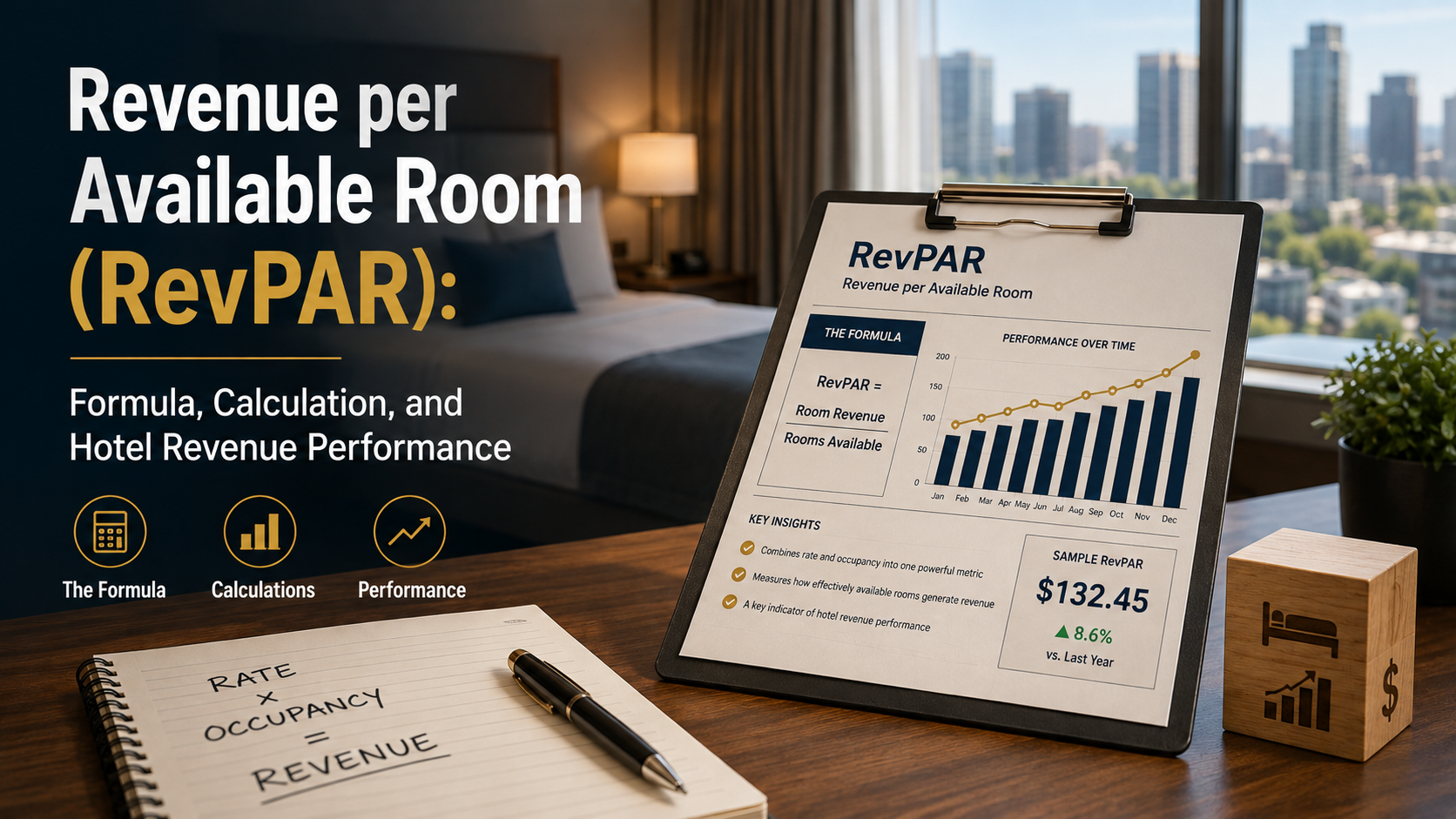
Core room metrics remain essential. Average daily rate measures the average room revenue generated from occupied rooms, while occupancy measures the proportion of available rooms sold. RevPAR combines rate and occupancy performance into a measure of room-revenue productivity.
Those metrics only describe part of the business. Depending on the hotel, management should also evaluate total revenue, ancillary revenue, food-and-beverage performance, distribution and acquisition costs, channel mix, direct-booking share, guest satisfaction, review performance, repeat and referral demand, labor costs, other operating expenses, and NOI.
No single metric demonstrates that boutique management is succeeding. Higher ADR is not necessarily an improvement if occupancy falls enough to reduce revenue. Higher occupancy is not necessarily desirable if it is purchased through excessive discounting or expensive distribution. More ancillary revenue is not necessarily valuable if the associated expenses grow faster than the revenue being generated.
Management should instead evaluate whether the hotel's differentiation is producing sustainable demand and revenue at a cost structure that supports the owner's financial objectives.
That is the point at which the advantages described throughout this article become economically meaningful.
Final Thoughts
The advantages of boutique hotel management come from having more opportunities to build strategy around the characteristics of an individual property. Management can use positioning, personalization, guest segmentation, pricing, local integration, reputation, distribution, ancillary offerings, relationship management, and marketing to create a hotel experience that is less interchangeable with competing accommodations.
Each of those opportunities also creates a corresponding management requirement. Personalization requires systems and training, distinctive design requires investment and maintenance, premium pricing requires perceived value, operational flexibility requires discipline, direct demand has acquisition costs, and additional amenities have to justify their complexity and expense.
For that reason, we do not view boutique hotels as inherently better businesses than standardized hotels. The boutique model simply provides a different set of strategic levers, and their value depends on how effectively management uses them.
The real advantage of boutique hotel management is therefore not the boutique label itself. It is the ability to identify what makes a particular property valuable, build a management strategy around those characteristics, and convert that differentiation into sustainable guest demand, operating performance, and long-term owner value.
Frequently Asked Questions
Does boutique hotel management always outperform traditional hotel management?
No. Boutique management can create advantages through property-specific positioning, personalized service, operational flexibility, and differentiated guest experiences, but none of those advantages guarantees stronger financial performance. A more standardized hotel model may perform better when brand recognition, operating scale, loyalty programs, or standardized efficiencies are particularly valuable in the market.
The relevant question for owners is whether boutique management can turn the characteristics of a particular property into enough additional guest value and demand to justify the costs required to deliver the experience. Performance ultimately depends on the asset, market, competitive position, operating model, and quality of execution.
What makes a hotel a good candidate for boutique management?
A hotel may be a strong candidate for boutique management when it has characteristics that can support meaningful differentiation. These might include distinctive architecture or design, a compelling location, historical significance, unusual amenities, strong connections to the destination, or opportunities to create an experience for a clearly defined guest segment.
Management should also consider market demand, the competitive set, achievable room rates, operating requirements, and any capital investment required to support the proposed positioning. A property does not become a good boutique candidate simply because it is small or independent. There should be a credible connection between what makes the asset different, who values those differences, and how management can convert that value into sustainable performance.
How do you know whether guests actually value a boutique hotel’s differentiation?
Guest behavior provides the strongest evidence. Management can evaluate booking conversion, achieved room rates, occupancy, guest reviews, survey feedback, repeat and referral behavior, amenity usage, ancillary spending, and performance relative to the hotel's competitive set. Reviews can be particularly useful for identifying which aspects of the experience guests repeatedly mention as reasons they enjoyed or disliked their stay.
Management should also test its assumptions over time. An expensive amenity, distinctive design feature, or highly personalized service may seem important internally without materially affecting guest decisions. Differentiation becomes commercially meaningful when the characteristics management emphasizes are also recognized and valued by the guests the property is trying to attract.
Can boutique hotel management support higher room rates without hurting occupancy?
Potentially, but differentiation does not automatically create a rate premium. A boutique property may have greater pricing opportunity when guests perceive enough additional value in its location, design, reputation, service, amenities, or experience to prefer it over competing accommodations at a higher rate.
The effect should be evaluated through ADR, occupancy, RevPAR, booking pace, conversion, and competitive performance rather than ADR alone. Raising rates while losing too much occupancy may reduce overall room revenue, while maximizing occupancy through discounting can sacrifice rate unnecessarily. The objective of revenue management is to determine the combination of rate and demand that produces the strongest economic result under current market conditions.
How should property owners determine whether boutique hotel management is creating value?
Owners should evaluate management across the complete economics of the property rather than relying on a single hotel metric. ADR, occupancy, RevPAR, total revenue, ancillary revenue, channel acquisition costs, guest reviews, operating expenses, and Net Operating Income (NOI) can each reveal a different part of performance.
Those measures should also be considered alongside capital expenditures and the owner's longer-term objectives for the asset. Higher occupancy, more direct bookings, stronger reviews, or additional revenue can all be positive developments without necessarily creating greater owner value if the costs required to produce them increase disproportionately. The stronger test is whether management is converting the property's competitive advantages into sustainable demand, operating performance, and financial results that support the owner's objectives for the asset.
More Recent Articles