Types of Food and Beverage Services
Types of Food and Beverage Services in Hospitality
By: Menandro Bacalangco Jr.
Types of Food and Beverage Services: Complete Guide for Hospitality Professionals
Food and beverage services play a vital role in the hospitality industry, shaping guest experiences in hotels, cafés, and fine dining restaurants. From formal table service to modern delivery options, each service type influences customer satisfaction and operational success.
Understanding the different types of food and beverage services is essential for hospitality professionals, students, and restaurant operators alike.
This guide will explore the main F&B service types, their characteristics, and the benefits each brings to both guests and businesses.
What is a Food and Beverage Services?
Food and beverage services encompass any situation within hospitality or a broader industry where people are provided with food and drinks. This can include restaurants, bars, catering services, cafeterias, and food delivered to individuals through room service at hotels. (GLION)
What Is the Role of Food & Beverage in the Hospitality Industry?
The food and beverage department is one of the most important pillars of the hospitality industry. Its role goes beyond simply providing meals and drinks — it significantly contributes to the overall guest experience, brand reputation, and revenue generation.
From creating unique dining experiences to ensuring smooth day-to-day operations, food and beverage teams are at the heart of what makes hospitality both a business and a memorable experience for guests. (SHMS)
Key Roles of Food & Beverage in Hospitality
- Enhancing Guest Experience
High-quality food and beverage services elevate guest satisfaction. Memorable meals, attentive service, and creative presentations create positive experiences that guests remember and share. - Revenue Generation
F&B operations are major revenue streams for hotels, resorts, and restaurants. Offering diverse dining options, special menus, and beverages can increase profitability and attract more customers. - Brand Image and Differentiation
Signature dishes, themed dining experiences, and exceptional service distinguish a brand from competitors. Unique F&B offerings can become a defining feature of a hospitality establishment. - Cultural and Social Engagement
Food and beverage services reflect local culture and culinary traditions, allowing guests to connect with the destination through cuisine. Social events, banquets, and catering also strengthen community engagement. - Operational Integration
The F&B department often works closely with other hotel or restaurant departments, including housekeeping, front office, and event management, to ensure seamless service and guest satisfaction.
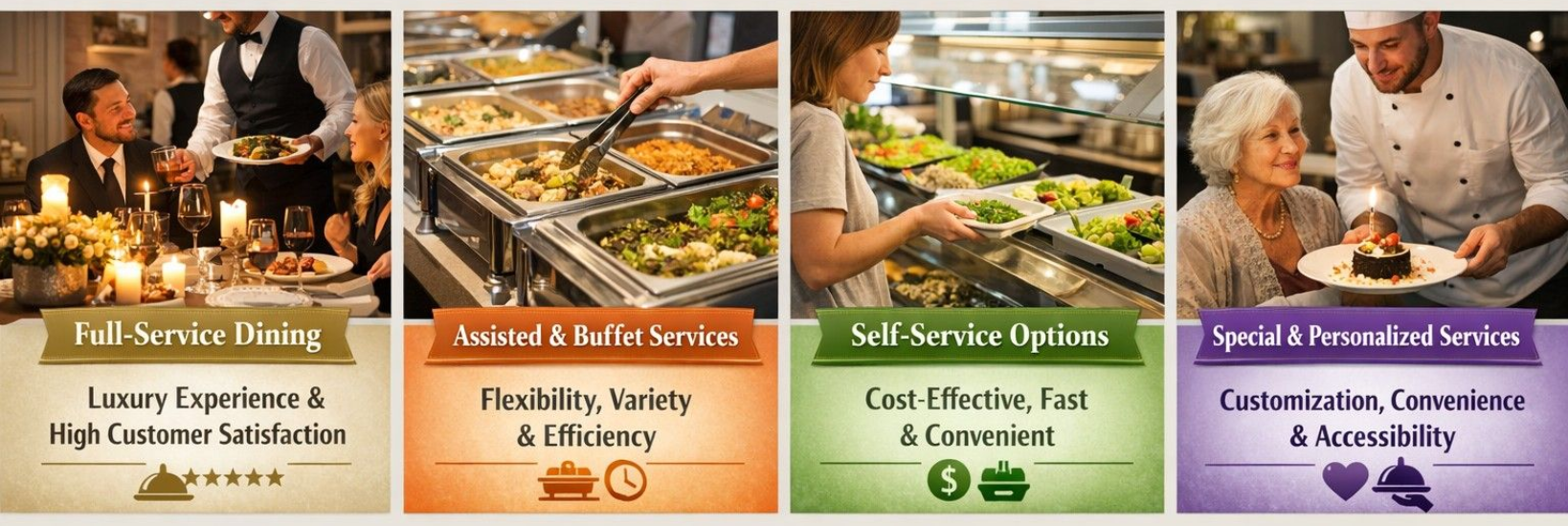
1. Full-Service Dining - Fine Dining Restaurants and Table Service
Full-service dining refers to restaurants or venues where staff handle most aspects of service, creating a seamless and often luxurious experience. This category includes formal dining and waiter-based service styles. (FHA)
Formal Dining
Formal dining services are a sophisticated style of restaurant experience where manners, attention to detail, and a refined ambiance combine to create a memorable dining experience.
- Fine Dining
– Multi-course meals served with attention to detail and professional service.
- French Service
– Courses are partially prepared in the kitchen and finished at the table.
- Russian Service
– Pre-plated dishes served uniformly to guests.
- English Service
– Food is portioned and served individually at the table.
- Guéridon Service
– Food is partially cooked or plated tableside on a mobile trolley for a theatrical presentation.
Waiter-Based Service
These are slightly less formal but still involve professional staff attending to guests:
- American Service
– Dishes are plated in the kitchen and served at the table, common in many restaurants.
- Table Service
– Staff take orders, serve meals, and provide personalized attention throughout the dining experience.
2. Assisted & Buffet Services - Specialty Dining for Groups and Events
Assisted services combine some self-service elements with staff assistance, offering flexibility and efficiency.
Buffet Service
Guests select their meals from a variety of dishes displayed on a counter. Popular in hotels, events, and large gatherings.
Lounge Service
Common in cafés, hotel lounges, and casual restaurants, where guests enjoy light meals or drinks in a relaxed environment, sometimes with minimal staff assistance.
3. Self-Service Options - Cafeteria and Quick Service Dining
Self-service is efficient and cost-effective, giving guests control over their dining experience.
- Cafeteria Service
– Guests move along a counter or stations to select meals, often in schools, hospitals, or corporate settings.
- Quick Service / Counter Service
– Common in fast food or casual restaurants; orders are placed at a counter and collected promptly.
4. Special & Personalized Services - Room Service and Beverage Services
These services cater to individual needs or provide convenience beyond traditional dining.
- Room Service
– Meals delivered directly to hotel rooms.
- Tray Service
– Pre-assembled meals delivered on trays, often used in hospitals, schools, and corporate settings.
- Home Delivery / Digital Ordering
– Growing in popularity; food delivered directly to homes or offices via apps or online platforms.
5. Benefits of Different Food and Beverage Service Types
Conclusion
Food and beverage services go beyond meal delivery—they shape guest experiences, drive revenue, and reflect operational quality. From full-service dining to self-service and delivery models, each F&B service type plays a key role in modern hospitality. For brands like
Roam Hospitality, their
F&B services are designed to create seamless, guest-centered experiences that align with today’s
travel and lifestyle expectations.
By leveraging diverse service types, Roam Hospitality enhances operational efficiency, elevates guest satisfaction, and sets a standard for excellence in the evolving F&B industry.
FAQ – Common Questions About Food and Beverage Services
What is food and beverage service in hospitality?
It’s the method of preparing, presenting, and delivering food and drinks to guests in hotels, restaurants, or other service settings.
Which service type is best for a hotel restaurant?
It depends on the target market. Fine dining suits luxury hotels, while buffet and self-service work well for large-scale operations or casual hotels.
How do service types impact customer experience?
The style of service affects speed, convenience, personalization, and overall guest satisfaction.
More Recent Articles