
Boutique Hotel Operations
Boutique Hotel Operations: How to Run a Successful Boutique Hotel
By: Menandro Bacalangco Jr. | December 31, 2025
Boutique Hotel Operations: The Ultimate Guide to Running a Guest-Centric and Efficient Property
Boutique hotels aren’t just places to stay—they’re destinations that offer a unique experience. With personalized services, distinctive design, and local charm, boutique hotels create memorable experiences that large chains often can’t match. Behind the artful decor and curated amenities lies a complex network of hotel operations that keeps everything running smoothly.
This guide will walk you through boutique hotel operations, highlighting what sets them apart while incorporating modern hotel tech and strategies for an exceptional guest experience.
What is Boutique Hotel Operations?
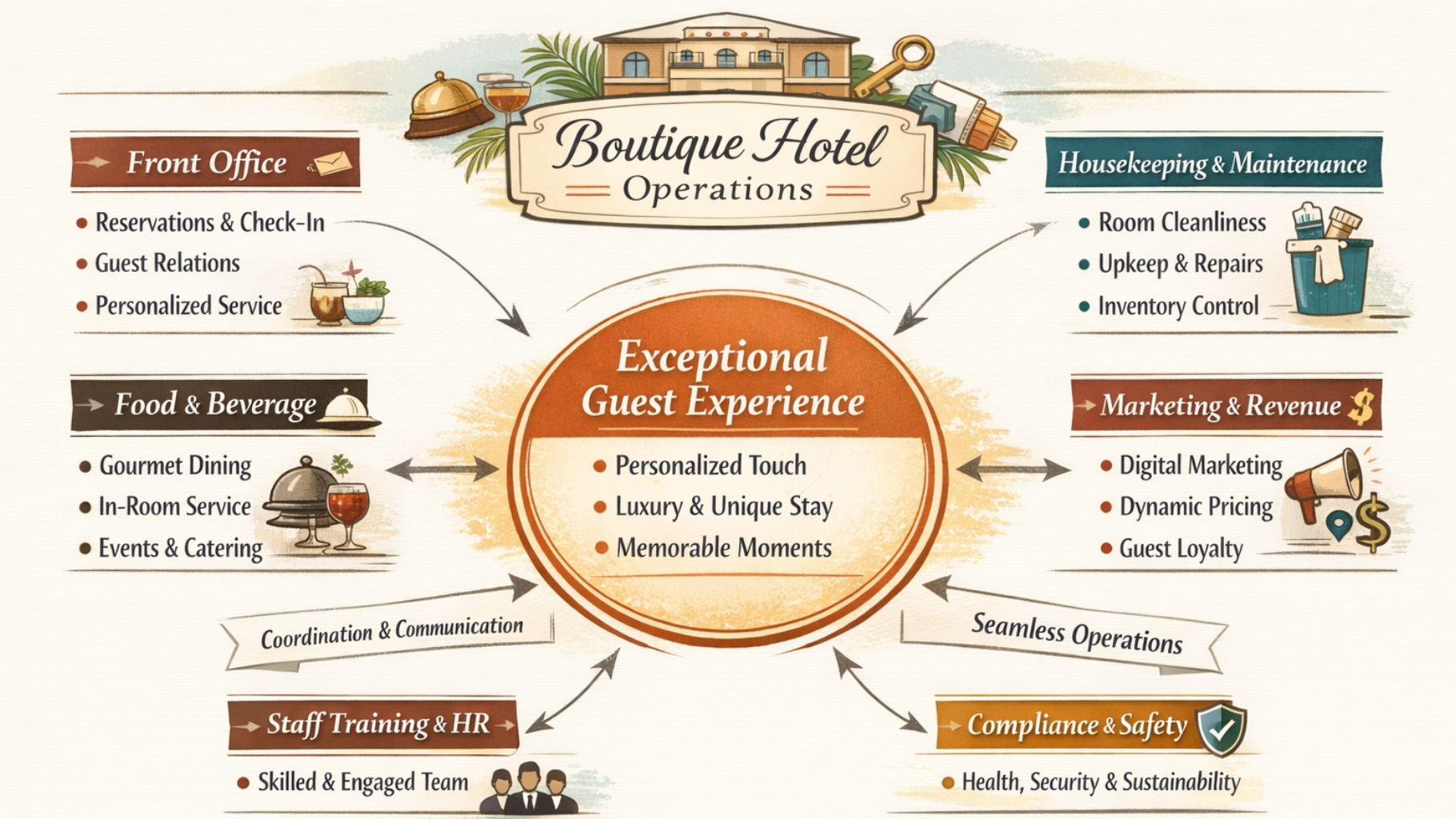
Boutique hotel operations refer to the day-to-day management and coordination of all activities that keep a boutique hotel running smoothly, from front desk services, housekeeping, and food & beverage, to marketing, revenue management, and technology integration. (Bellboy)
Unlike chain or standardized hotels that prioritize operational uniformity, boutique hotels are defined by their distinctive architecture, curated interiors, and narrative design approach. (Interior.global)
Key aspects of boutique hotel operations include:
- Guest Experience: Ensuring every touchpoint is memorable and tailored.
- Staff Coordination: Managing a small, versatile team that handles multiple roles.
- Property Management & Revenue Strategies: Optimizing bookings, pricing, and ancillary services.
- Use of Technology: Leveraging hotel tech like PMS, POS, and digital concierge tools to streamline operations while maintaining a personal touch.
By understanding what boutique hotel operations involve, managers and staff can stay focused on delivering exceptional experiences while keeping the business efficient and profitable.
Why Boutique Hotel Operations Are Unique
Boutique hotels typically range from 10 to 100 rooms, meaning they operate with smaller teams and provide more personalized services. Unlike large hotels, boutique hotels thrive on character, creativity, and storytelling, creating memorable experiences that big chains often can’t match. (We are planet)
All hotels share essential aspects of operations, such as staff coordination, reservations, housekeeping, and revenue management. Boutique hotels, however, adapt these fundamentals to smaller teams, personalized service, and a distinct brand identity.
Key differences include:
- Personalized guest experiences: Staff know guests by name, anticipate needs, and provide one-of-a-kind amenities.
- Distinct brand identity: Every room, service, and event reflects the hotel’s personality.
- Flexibility and creativity: Smaller teams allow rapid adaptation to guest preferences or market trends.
Boutique hotel operations must prioritize one thing above all: creating a remarkable guest experience that sets the property apart.
1. Core Pillars of Boutique Hotel Operations
Boutique hotel operations can be categorized into three main areas:
- Front-of-House: Guest-facing services, including check-in/check-out, concierge, and in-stay support.
- Back-of-House:
Housekeeping, maintenance, and logistics.
- Back Office: Administration, accounting, property management, and revenue management.
While these pillars exist in all hotels, boutique hotels implement them with smaller, cross-trained teams and a focus on personalization over scale.
2. Crafting Guest Experiences That Build Loyalty
Guest experience is the heartbeat of boutique hotels. Every touchpoint should be thoughtful, personal, and memorable.
Check-In and Check-Out
- Use mobile check-in or keyless room entry to combine efficiency with convenience.
- Offer small welcome touches like local treats or personalized notes.
- Note preferences to ensure a tailored experience for returning guests.
In-Stay Touchpoints
- Concierge services let guests explore the city or local attractions.
- Provide one-of-a-kind amenities and small surprises that enhance the stay.
- Staff engagement strengthens the guest experience.
Post-Stay Engagement
- Follow up with thank-you emails, loyalty offers, and surveys.
- Respond to online reviews professionally to reinforce the hotel’s
brand and commitment to hospitality.
3. Efficiency Without Losing Character
Boutique hotels must be efficient while staying true to their unique identity.
Technology & Hotel Tech
- Property Management Systems (PMS): Centralised operations to manage bookings, guest data, and housekeeping schedules.
- POS Systems: Track food, beverage, and in-room services efficiently.
- Digital concierge tools help streamline operations while maintaining a personal touch.
Standard Operating Procedures (SOPs)
- SOPs help stay focused on core services while allowing staff to add personal touches.
- Checklists ensure rooms, amenities, and guest requests meet boutique standards.
Feedback Loops
- Collect guest feedback to refine operations and improve overall hospitality.
- Continuous improvement ensures boutique hotels remain competitive without losing character.
4. Staffing: The Heart of Boutique Service
Boutique hotels operate with small, versatile teams, making staff management critical.
Hiring & Training
- Prioritize personality, adaptability, and cultural fit.
- Train
staff to anticipate guest needs and enhance the
guest experience.
Cross-Training
- Team members may handle multiple roles, including front desk, concierge, and
housekeeping.
- Flexible
managers ensure smooth operations even during peak periods.
Culture and Retention
- Empower employees to deliver personalized
services.
- Recognize achievements and provide growth opportunities to retain top talent.
5. Revenue Strategies for Boutique Hotels
Revenue management in boutique hotels goes beyond room pricing.
Dynamic Pricing & Channel Mix
- Adjust rates based on occupancy, seasonality, and events.
- Encourage direct
bookings while maintaining
online visibility.
Packages & Themed Experiences
- Offer wellness weekends, culinary experiences, or romantic getaways.
- Bundled packages improve perceived value and attract
guests seeking curated
experiences.
Ancillary Revenue
- Food & beverage, spa treatments, and local tours create additional income streams.
- Small-scale workshops or private dinners enhance both revenue and the
guest experience.
6. Supplier and Local Partner Ecosystem
Boutique hotels thrive by engaging with local vendors and communities.
- Partner with local businesses for tours, wellness experiences, or pop-up events.
- Highlight sustainability and locally sourced
amenities to strengthen the
brand.
7. Metrics That Matter
Monitoring the right KPIs ensures operations management supports guest satisfaction and profitability:
- Guest Satisfaction Scores (GSS)
- Check-in and room turnover efficiency
- Revenue per Available Room (RevPAR)
- Online reviews and social engagement
A dedicated operations manager can oversee these metrics and help the hotel stay focused on improving services.
8. Emerging Trends in Boutique Hotel Operations
Boutique hotels must evolve with industry trends:
- Sustainability and wellness-focused packages
- Advanced hotel tech for mobile check-in and smart rooms
- Flexible stays and hybrid workspaces for long-term guests
- Experience-centric marketing that emphasizes local culture and personalized services
9. Exploring Essential Aspects of Boutique Hotel Operations
To truly excel, boutique hotels should explore essential aspects that make operations stand out:
- Centralised Operations: Using PMS and POS for efficient workflows.
- Property Management & Revenue Management: Maximizing occupancy and profitability while maintaining quality services.
- Guest Experience Design: From check-in to check-out, ensuring memorable stays with one-of-a-kind amenities.
Conclusion: The Boutique Balance
Boutique hotel operations are a delicate balance of efficiency and personalization. By combining core hotel operations principles with innovative boutique strategies, hotels can:
- Deliver unforgettable experiences for every guest
- Optimize revenue and centralised operations
- Operate efficiently with small teams
- Build a strong, distinctive brand
Boutique hotels that integrate these strategies will thrive in a competitive market, creating
memorable stays for every
guest.